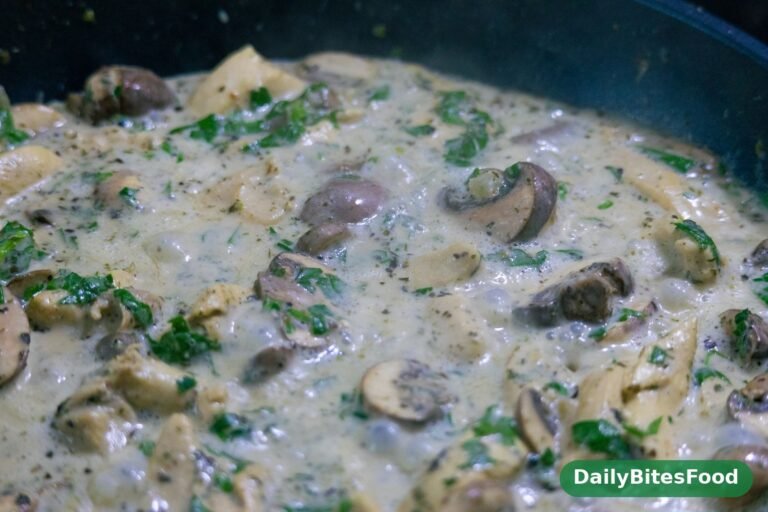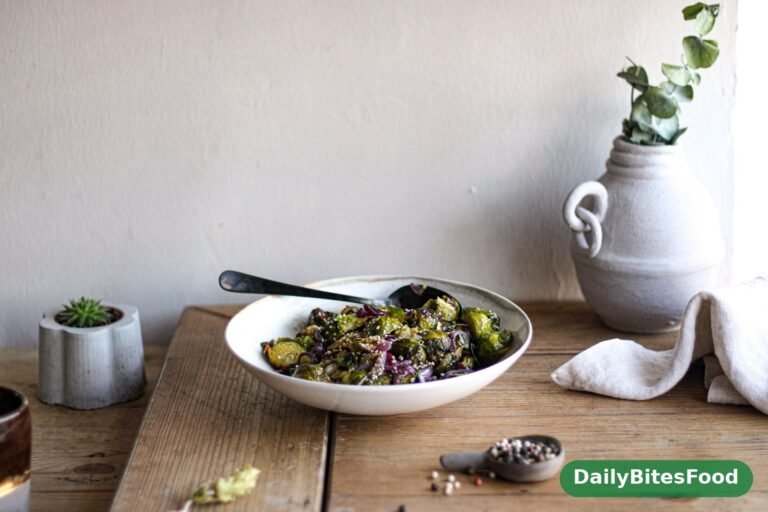
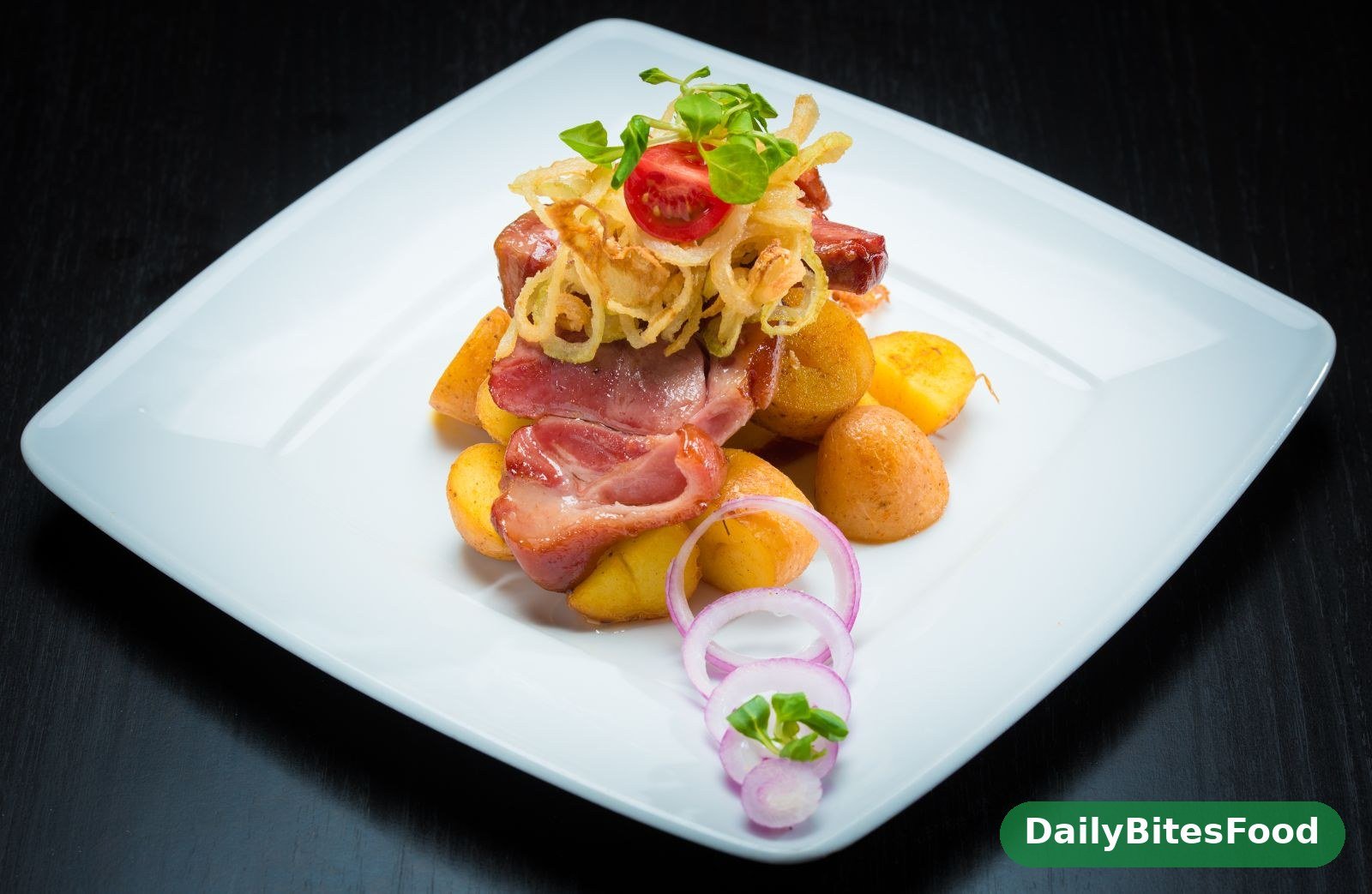
Warm German Potato Salad with Bacon and Mustard
There is a moment, every summer, when someone at a barbecue lifts the lid off a bowl of potato salad and the whole table goes quiet for a second. It is usually the cold, mayonnaise kind, pale and a little sad, and everyone takes a polite spoonful and moves on. But the first time I served a warm German potato salad at a family cookout, something different happened. The potatoes were still steaming, the bacon was crisp, the dressing was tangy and warm, and people went back for seconds before the burgers were even off the grill. My uncle, who has opinions about everything and is not shy about sharing them, asked for the recipe before he had finished his plate. That has never happened with a cold potato salad, and I doubt it ever will.
German potato salad is a completely different creature from the mayonnaise version most of us grew up with. There is no mayo at all. Instead, the potatoes are tossed in a hot dressing made from bacon fat, vinegar, mustard, and a little sugar, and the heat does something magical. The warm potatoes soak up the dressing like sponges, the onions soften just slightly, and the whole dish comes together into something tangy, smoky, savoury, and deeply comforting. It is served warm, which means it belongs on the table next to grilled meats and roast chicken in a way that cold potato salad never quite does. It tastes like it has a history, and it does. This is the kind of dish that has been made in German kitchens for generations, passed down through families, and every family has its own version.
I first learned to make it from a neighbour years ago, a woman who had grown up in Bavaria and who cooked the way her grandmother had taught her, which is to say, by feel and by taste rather than by measuring spoons. She showed me how to boil the potatoes until they were just tender, how to fry the bacon until it was properly crisp, and how to make the dressing in the same pan so nothing was wasted. She told me the secret was to pour the dressing over the potatoes while they were still warm, because warm potatoes absorb flavour and cold ones just sit in it. I have made it her way ever since, and I have never been tempted to go back to the cold version. If you like hearty potato dishes, this easy potato dinner without cheese is another wonderful way to turn a bag of potatoes into a meal worth sitting down for.
What I love most about this recipe is how it manages to be both rustic and a little bit elegant. It is humble food, made from potatoes, bacon, and onions, and yet it has a complexity that surprises people. The vinegar gives it brightness, the mustard gives it warmth and depth, the bacon gives it smoke and salt, and a little sugar rounds off the sharp edges. It is the kind of dish that tastes like it took hours, but it comes together in about forty minutes, and most of that is just the potatoes boiling. If you have never tried a warm potato salad, this is the one to start with, and I promise you will never look at potato salad the same way again.
Why You’ll Love This Recipe
The first reason is the flavour, and it is not close. A warm, tangy, bacon-rich dressing is simply more interesting than cold mayonnaise, and the difference is obvious from the first bite. The potatoes are tender and warm, the bacon is crisp and smoky, the onions are soft and sweet, and the mustard and vinegar give the whole dish a bright, punchy character that cuts through rich grilled meats beautifully. It is the kind of side dish that people remember, and it is often the thing guests ask about after the meal. I have watched this salad disappear from the table faster than the main course more than once.
The second reason is that it is served warm, which changes everything about how it fits into a meal. Cold potato salad is a summer-only dish, something you eat at a picnic. Warm German potato salad works all year round. It is wonderful next to sausages and grilled chicken in summer, it is perfect with roast pork in autumn, and it is deeply comforting alongside a stew or a roast in winter. It holds well in a warm oven, it travels well to a potluck, and it does not need to be kept cold, which makes it far more practical for gatherings. If you are looking for a side dish that works in every season, this is it.
It is also a wonderfully practical recipe. The ingredients are cheap, the steps are simple, and it uses one pan for the bacon, the onions, and the dressing, so the washing up is minimal. You can cook the potatoes and the bacon ahead of time, and the whole dish comes together in ten minutes when you are ready to serve. It feeds a crowd easily, it doubles without any trouble, and leftovers are lovely the next day, either reheated gently or eaten at room temperature. For a classic take on the same idea, the Taste of Home German potato salad is a great reference, and it shows how many families have their own beloved version of this dish.
Finally, this recipe is a wonderful introduction to German cooking for anyone who has never tried it. It is not fussy, it does not require any special ingredients, and it teaches you a technique, making a warm vinaigrette in the pan, that you will use again and again. Once you have made this dressing, you will start making warm dressings for all sorts of salads, because the idea of pouring a hot, tangy dressing over warm vegetables is one of those simple cooking lessons that changes how you cook. It is honest, generous, old-fashioned food, and it deserves a place in every cook’s repertoire.
Ingredients You’ll Need
- 1 kg (about 2 1/4 lbs) waxy potatoes, such as red potatoes or Yukon Gold, scrubbed
- 200 g (about 7 oz) streaky bacon, chopped into small pieces
- 1 medium red onion, finely diced
- 2 cloves garlic, finely minced
- 80 ml (1/3 cup) apple cider vinegar
- 2 tablespoons wholegrain mustard
- 1 tablespoon Dijon mustard
- 1 tablespoon granulated sugar
- 120 ml (1/2 cup) chicken or vegetable stock
- 1 teaspoon fine sea salt, plus more to taste
- 1/2 teaspoon black pepper, freshly ground
- 1/2 teaspoon smoked paprika (optional)
- 3 spring onions (green onions), thinly sliced
- 3 tablespoons fresh parsley, finely chopped
- 2 tablespoons fresh dill, chopped (optional)
How to Make Warm German Potato Salad with Bacon and Mustard
Start with the potatoes, because they take the longest and everything else follows from them. Put the whole, unpeeled potatoes into a large pot and cover them with cold, salted water. Bring the water to a gentle boil over medium-high heat, then turn the heat down so the water is simmering rather than rolling. Cook the potatoes for fifteen to twenty minutes, depending on their size, until they are just tender when pierced with a knife. You want them cooked through but still firm enough to hold their shape when sliced, because potatoes that fall apart will turn the salad into mash. Start checking after fifteen minutes, and take them out as soon as a knife slides in with only a little resistance. Drain them in a colander and leave them to cool just enough that you can handle them, which takes about ten minutes. While they are still warm, peel off the skins, which should slip off easily, and slice the potatoes into rounds about half a centimetre thick, or cut them into chunky bite-sized pieces if you prefer.
While the potatoes are cooking, get the bacon going. Put the chopped bacon into a large, cold frying pan and set it over medium heat. Starting the bacon in a cold pan lets the fat render out slowly and evenly, which gives you crisp bacon and plenty of fat for the dressing. Cook the bacon for eight to ten minutes, stirring occasionally, until it is deep golden brown and properly crisp at the edges. Use a slotted spoon to lift the bacon out onto a plate lined with paper towels, and set it aside. Do not pour away the fat in the pan. That fat is liquid gold, and it is the base of the dressing. You should have about three tablespoons left in the pan. If you have much more than that, spoon a little out, and if you have less, add a small knob of butter.
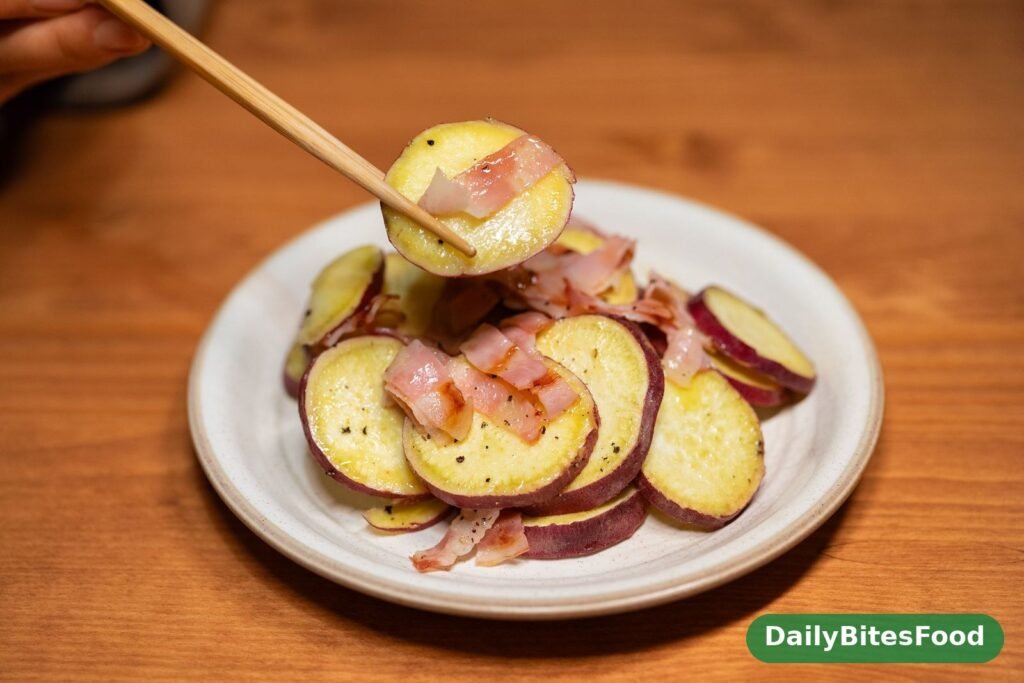
Now make the dressing in the same pan, using all that wonderful bacon flavour. Add the diced red onion to the hot bacon fat and cook for three to four minutes, stirring often, until the onion has softened and turned translucent. Add the garlic and cook for just thirty seconds until it smells fragrant. Then pour in the apple cider vinegar, and be ready for a good sizzle and a sharp smell that will clear your sinuses for a moment. Add the wholegrain mustard, the Dijon mustard, the sugar, the stock, the salt, the pepper, and the smoked paprika if you are using it. Stir everything together and let it simmer for two to three minutes, until the dressing has thickened very slightly and the sugar has dissolved completely. Taste it, and this is important, because the dressing should be tangy and bold, with a clear sweetness behind the vinegar. If it is too sharp for your taste, add a pinch more sugar. If it is too sweet, add another splash of vinegar.
Put the warm sliced potatoes into a large serving bowl, and pour the hot dressing over them straight from the pan. Add about two-thirds of the crispy bacon and half of the spring onions and parsley, and toss everything together gently with a large spoon, taking care not to break the potato slices. The potatoes will soak up the dressing as you toss, and the bowl will smell incredible. Let the salad sit for five minutes so the flavours can settle and the potatoes can absorb the dressing properly. Taste and adjust the seasoning, adding more salt, pepper, or vinegar if needed. Scatter the remaining bacon, spring onions, parsley, and dill over the top, and serve warm. The salad is at its best within half an hour of making it, when the potatoes are still warm and the bacon is still crisp.
Tips for Perfect Warm German Potato Salad
Choosing the right potato matters more than anything else in this recipe. Waxy potatoes like red potatoes, Yukon Gold, or fingerlings hold their shape when boiled and sliced, and they absorb the dressing without falling apart. Floury potatoes like russets will break down and turn the salad into a mushy mess, and they are best kept for mashed potatoes. I have made this salad with red potatoes more times than I can count, and their skins add a lovely colour and texture. If you are not sure what kind of potato you have, boil one first and see how it holds up before you commit the whole batch.
Do not overcook the potatoes. This is the single most common mistake, and it is the difference between a beautiful salad and a bowl of warm mash. Start checking early, and take the potatoes out while they still have a little firmness in the centre, because they will keep cooking from residual heat after you drain them. A knife should slide in with slight resistance, not sink in effortlessly. If you are nervous, test the smallest potato first, and remember that you can always cook them a minute longer, but you cannot uncook them once they have gone soft.
Pour the dressing over the potatoes while they are still warm. This is the lesson my neighbour taught me, and it is the heart of the recipe. Warm potatoes absorb flavour in a way that cold ones simply do not, and the dressing soaks right into the slices instead of pooling at the bottom of the bowl. If your potatoes have gone completely cold by the time the dressing is ready, warm them gently in a low oven or in the microwave for a minute before you dress them. It makes a real difference. For another take on the same idea, the Taste of Home bacon potato salad shows how bacon and potatoes belong together in almost any form.
Keep some bacon back for the top, and add it at the very end. If you toss all the bacon into the warm dressing and let it sit, it will soften and lose its crunch, and the crunch is half the pleasure of this dish. Hold back about a third of the bacon and scatter it over the finished salad just before serving, so it stays crisp. The same goes for the spring onions and herbs: some go in the toss, and some go on top for freshness and colour. And taste the dressing before you pour it over the potatoes. It should be bold and tangy, because the potatoes will mellow it. If the dressing tastes right on its own, it will taste a little flat once it is mixed in, so make it a touch stronger than you think you need.
Finally, do not be afraid to adjust the dressing to your taste. Some families like their German potato salad very sharp and vinegary, others like it sweeter and milder. The recipe as written is balanced, but it is a starting point, not a rule. Add more mustard if you like it punchy, more sugar if you like it gentle, more vinegar if you like it bright. That is how family recipes are born, by making a dish your own over time, and this salad is very forgiving of that kind of experimentation.
Variations to Try
Once you have the classic version down, there are plenty of ways to make it your own. For a Bavarian-style version, add a handful of chopped pickles or cornichons to the salad, which adds a lovely briny crunch. For a richer version, stir in a spoonful of sour cream or crème fraîche at the end, which softens the tang and adds a creamy note without turning it into a mayonnaise salad. A pinch of caraway seeds, toasted in the pan with the onions, gives the dressing a warm, earthy, distinctly German character that is wonderful with sausages.
In summer, I sometimes add sliced radishes and chopped cucumber for freshness and crunch, and a handful of chopped chives instead of the spring onions. The cool, crisp vegetables against the warm, tangy potatoes are a lovely contrast. In autumn, a diced apple, added with the onions, brings a gentle sweetness that works beautifully with the bacon. You can also swap the bacon for pancetta or for smoked sausage, sliced and browned in the pan, which makes the salad heartier and turns it into almost a main course.
For a lighter version, use turkey bacon or skip the bacon altogether and use olive oil for the dressing, with a spoonful of smoked paprika to keep the smoky note. It is a different dish, but it is still delicious, and it is a good option for anyone who does not eat pork. You can also add a couple of chopped hard-boiled eggs, which is traditional in some regions and makes the salad more substantial. And if you are building a meal around this salad, a simple grilled main like this quick chicken recipe with pantry ingredients is a perfect partner, because the chicken is ready in twenty minutes and the salad does the heavy lifting on flavour.
Serving Ideas

The natural home of this salad is next to grilled and roasted meats, and it is at its best at a barbecue. Serve it alongside sausages, burgers, grilled chicken, or pork chops, and watch it disappear. The tangy dressing cuts through the richness of grilled meat in a way that few other sides can, and the warm potatoes are deeply satisfying. At a cookout, I like to put the salad in a wide, shallow bowl so people can see the bacon and herbs on top, and I always make a double batch, because a single batch never seems to be enough.
It is also wonderful with roast pork or roast chicken on a Sunday, where it replaces both the roast potatoes and the salad course in one dish. Serve it in the middle of the table, family style, with the meat carved alongside, and let everyone help themselves. It is lovely with a simple green salad and some crusty bread, and it is hearty enough to be the main event if you add a fried egg on top and call it supper, which I have done more than once on a busy evening.
For a potluck or a picnic, this salad travels well in a covered dish, and it holds its temperature for a good while wrapped in a tea towel. Unlike mayonnaise salads, it does not need to be kept cold, which makes it far more practical for outdoor eating. I have taken it to picnics, to neighbours’ barbecues, and to family gatherings, and it has always come home in an empty bowl. Serve it with a simple soup as a starter, like this simple chicken soup with pantry ingredients, and you have a meal that feels generous and home-cooked without any fuss at all.
Storage and Reheating
Leftover German potato salad keeps well in the fridge for three to four days, stored in an airtight container. The flavours actually deepen overnight, as the potatoes continue to absorb the dressing, and many people, myself included, think it tastes even better the next day. The bacon will soften in the fridge, so if you want to bring back the crunch, fry a little extra bacon and scatter it over the reheated salad before serving.
To reheat, warm the salad gently in a large pan over low heat, stirring occasionally, until it is heated through. Add a splash of stock or water if it seems dry, and a splash of vinegar if the tang has faded. You can also warm it in the microwave in short bursts, stirring between each one, though the pan gives a better result. Avoid high heat, because it can make the potatoes break apart. Serve it warm, with fresh herbs scattered over the top, and it will taste almost as good as it did on the day you made it.
I would not recommend freezing this salad, because the potatoes go grainy and watery when thawed, and the dressing separates. It is a dish best eaten within a few days. If you have a large amount left over, the best use for it is to fry it up the next morning: heat a little oil in a pan, add the cold salad, and press it down into a cake. Fry until the bottom is crisp and golden, then flip and fry the other side. It makes a wonderful breakfast hash, especially with a fried egg on top. And if you are planning meals around leftovers, these quick meals with leftover cooked chicken are full of ideas for turning yesterday’s cooking into today’s dinner without any waste.
Frequently Asked Questions
Can I make German potato salad ahead of time?
Yes, and it actually improves with a little time. You can cook the potatoes and the bacon and make the dressing a day ahead, storing them separately in the fridge. When you are ready to serve, warm the potatoes gently, reheat the dressing in the pan, and toss everything together with fresh herbs. The salad itself can be made a few hours ahead and kept at room temperature, covered, until serving time. It holds well for up to two hours at room temperature, which makes it a great choice for a party. Just hold back some of the bacon to scatter over the top at the last minute so it stays crisp.
What kind of potatoes are best for German potato salad?
Waxy potatoes are essential. Red potatoes, Yukon Gold, fingerlings, and new potatoes all hold their shape when boiled and sliced, and they absorb the dressing without falling apart. Avoid floury potatoes like russets, which break down and turn the salad mushy. If you are not sure what variety you have, boil one potato first and test it: it should hold its shape when sliced and feel firm but tender. Leaving the skins on adds colour, texture, and nutrients, so I usually keep them on, but you can peel the potatoes if you prefer a cleaner look.
Is German potato salad served warm or cold?
Traditionally it is served warm, and that is how I recommend it. The warm potatoes absorb the hot vinegar dressing, which is the whole point of the recipe. It is also delicious at room temperature, and many families serve it that way at picnics and barbecues. It is rarely served cold from the fridge, because the bacon fat in the dressing firms up when cold and the flavours go dull. If you do serve it from the fridge, let it come to room temperature first, or warm it gently, and the flavours will wake right back up.
Can I make this recipe without bacon?
Yes, you can, and it is still a lovely salad. Replace the bacon fat with olive oil or butter for the dressing, and add a teaspoon of smoked paprika to keep the smoky note. You could also add some sautéed mushrooms for a savoury depth, or some toasted sunflower seeds for crunch. The dressing itself, vinegar, mustard, and sugar, is the heart of the dish, and it works beautifully on its own. Turkey bacon is another option if you want the bacon flavour without pork, though it renders less fat, so you may need to add a little oil to the pan.
How long does warm German potato salad last in the fridge?
Stored in an airtight container, it keeps well for three to four days. The flavours deepen as it sits, and it is often better on the second day. Reheat it gently in a pan over low heat with a splash of stock or water to loosen it, and add a splash of vinegar if the tang has faded. The bacon will have softened, so consider frying a little fresh bacon to scatter over the top. Do not leave the salad at room temperature for more than two hours, and do not freeze it, because the potatoes go grainy when thawed.
Why did my potato salad turn out mushy?
The most common cause is overcooked potatoes. Potatoes for this salad should be cooked until just tender, with a little firmness left in the centre, because they continue cooking from residual heat after draining. Start checking early, after fifteen minutes, and take them out as soon as a knife slides in with slight resistance. The second cause is using floury potatoes instead of waxy ones. Russets and similar varieties break down easily and are better for mashing. The third cause is tossing the salad too roughly. Use a large spoon and fold gently rather than stirring vigorously, and the slices will stay intact.