
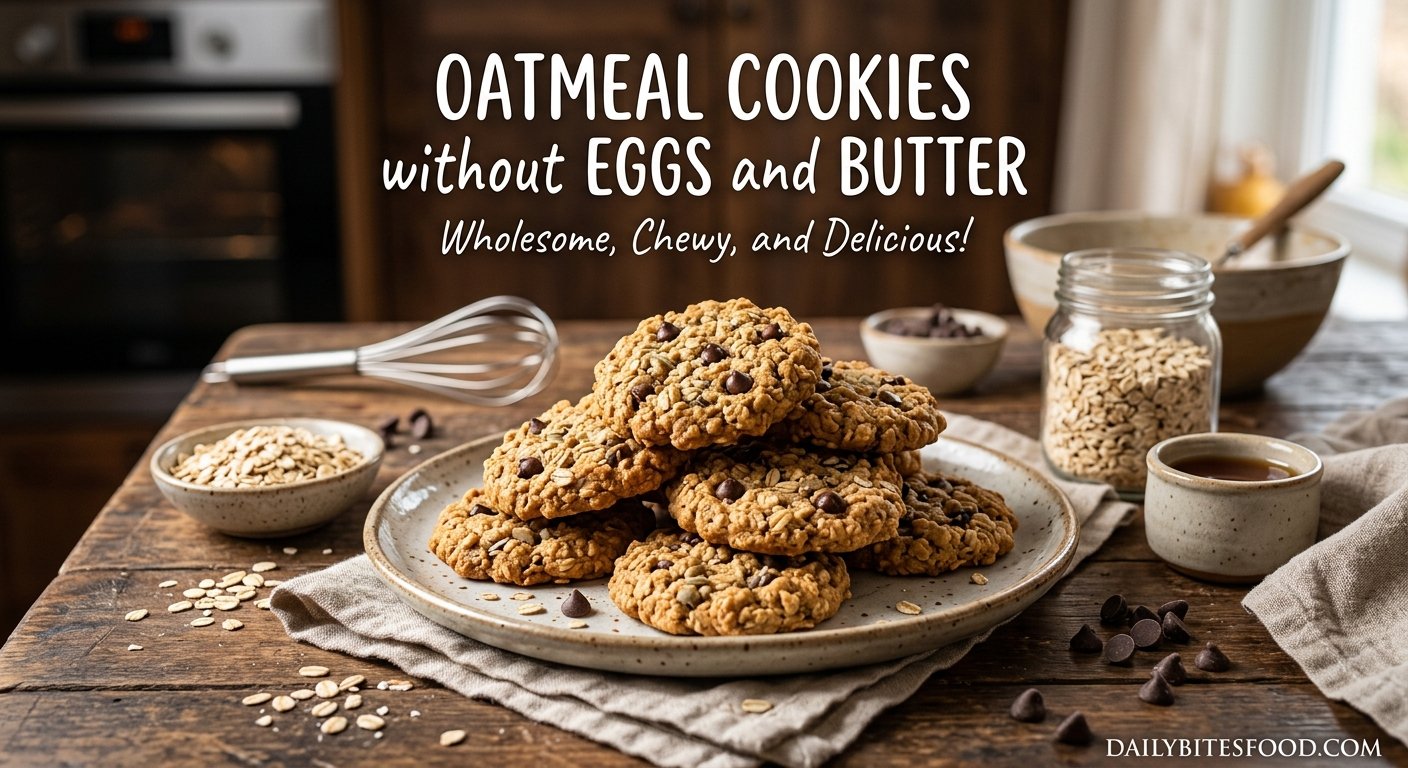
Oatmeal Cookies Without Eggs and Butter: Easy, Chewy, and Delicious

If you love homemade cookies but have run out of eggs and butter, there is no need to give up on baking. These oatmeal cookies without eggs and butter are simple to prepare, deliciously chewy, and made with everyday pantry ingredients. They are perfect for breakfast treats, afternoon snacks, lunchboxes, or whenever you want something sweet without making a trip to the grocery store.
The best part is that you do not need special baking equipment or complicated ingredients. Rolled oats provide a hearty texture, while oil keeps the cookies tender and moist. A little brown or white sugar adds sweetness, and vanilla extract brings everything together with a classic homemade cookie flavor.
Whether you follow a dairy-free diet, avoid eggs, or simply want an easy cookie recipe, these eggless oatmeal cookies are worth adding to your baking routine. With a few helpful tips, you can make cookies that are soft in the middle, lightly crisp around the edges, and full of comforting oatmeal flavor.
Why You’ll Love These Oatmeal Cookies Without Eggs and Butter
There are plenty of reasons to try this easy oatmeal cookie recipe. It uses simple ingredients, requires minimal preparation, and produces delicious results without traditional eggs or butter.
No eggs required: A mixture of ground flaxseed and water helps bind the ingredients together, making the cookies easier to shape and less likely to crumble.
Completely dairy-free: Since this recipe uses neutral cooking oil instead of butter, it is suitable for people avoiding dairy ingredients. Check the labels of your other ingredients if you need to avoid dairy completely.
Easy pantry ingredients: You probably already have most of the ingredients in your kitchen, including oats, flour, sugar, oil, and baking soda.
Chewy and satisfying: Oats add a hearty texture that makes these cookies feel homemade and comforting.
Easy to customize: Add raisins, chocolate chips, cinnamon, chopped nuts, or dried cranberries to create your favorite flavor combination.
Great for beginners: You do not need an electric mixer, softened butter, or complicated baking techniques.
Ingredients for Oatmeal Cookies Without Eggs and Butter
Before you begin, gather the following ingredients. Measuring everything in advance makes the baking process easier and helps you achieve consistent results.
Ingredients
- 1 cup rolled oats
- 3/4 cup all-purpose flour
- 1/2 cup brown sugar
- 1/4 cup neutral vegetable oil
- 1 tablespoon ground flaxseed
- 3 tablespoons water
- 1 teaspoon vanilla extract
- 1/2 teaspoon ground cinnamon
- 1/2 teaspoon baking soda
- 1/8 teaspoon salt
Optional additions:
- 1/4 cup raisins
- 1/4 cup dairy-free chocolate chips
- 2 tablespoons chopped walnuts or almonds
These quantities make approximately 12 small to medium cookies, depending on how much dough you use for each one.
Choosing the Right Oats
Rolled oats are an excellent choice for this recipe because they provide a pleasant chewy texture. They hold their shape during baking and give the cookies a traditional oatmeal appearance.
Quick oats can also work, although the finished cookies may have a softer texture. Steel-cut oats are not recommended because they are much harder and require more cooking time.
For the best balance of chewiness and structure, choose plain rolled oats without added sugar or flavoring.
Choosing Oil Instead of Butter
Butter contributes flavor, moisture, and structure to traditional cookies. In this recipe, neutral vegetable oil replaces butter and helps keep the cookies tender.
Canola oil, sunflower oil, or another mild-flavored cooking oil works well. Coconut oil can also be used, although it may produce a slightly different texture and flavor.
Avoid strongly flavored oils unless you specifically want their taste in your cookies.
Why Use Ground Flaxseed?
Without eggs, cookie dough needs another ingredient to help hold everything together. Ground flaxseed mixed with water creates a gel-like mixture that acts as a binder.
If you do not have ground flaxseed, you can try using a similar egg substitute designed for baking. Keep in mind that changing the binder may affect the final texture.
How to Make Oatmeal Cookies Without Eggs and Butter
Making these cookies is straightforward. Follow the steps below for a batch of soft, flavorful oatmeal cookies.
Step 1: Prepare the Flax Egg
Add one tablespoon of ground flaxseed and three tablespoons of water to a small bowl. Stir well and allow the mixture to rest for about five to ten minutes.
During this time, the mixture will thicken and develop a gel-like consistency. This helps bind the cookie dough and reduces the chance of the cookies falling apart.
Do not skip this step. Mixing the flaxseed directly into the dry ingredients will not provide the same binding effect.
Step 2: Preheat the Oven
Preheat your oven to 350°F (175°C).
Line a baking sheet with parchment paper. If you do not have parchment paper, use a lightly greased baking sheet.
Preparing the baking tray before mixing the dough makes it easier to transfer the cookies into the oven without delay.
Step 3: Combine the Dry Ingredients
In a medium mixing bowl, combine the rolled oats, all-purpose flour, brown sugar, baking soda, ground cinnamon, and salt.
Stir until everything is evenly distributed.
Breaking up any lumps in the brown sugar is helpful because large clumps can create uneven sweetness throughout the cookies.
Step 4: Mix the Wet Ingredients
In another bowl, combine the vegetable oil, vanilla extract, and prepared flax egg.
Whisk until the ingredients are blended.
The mixture does not need to become fluffy. Since this recipe contains no butter, there is no need to cream fat and sugar together.
Step 5: Make the Cookie Dough
Pour the wet ingredients into the bowl of dry ingredients. Stir gently until a thick dough forms.
If you want to include raisins, chocolate chips, or chopped nuts, fold them into the dough at this stage.
The dough should hold together when pressed between your fingers. If it seems slightly dry, add a teaspoon of water at a time. If it appears excessively wet, allow it to rest for several minutes so the oats can absorb some moisture.
Avoid adding too much flour because it can make the finished cookies dry and dense.
Step 6: Shape the Cookies
Scoop small portions of dough onto the prepared baking sheet, leaving approximately two inches between each cookie.
Gently flatten each portion with the back of a spoon or your fingers. These cookies may not spread as much as traditional butter-based oatmeal cookies, so shaping them before baking helps them cook evenly.
For a uniform batch, use a tablespoon or small cookie scoop to portion the dough.
Step 7: Bake Until the Edges Are Set
Place the baking sheet in the preheated oven and bake for approximately 10 to 14 minutes.
The edges should look lightly golden, while the centers may still appear a little soft. That is normal.
Do not wait until the entire cookie looks completely firm. Oatmeal cookies continue to set as they cool, and overbaking can make them dry.
Baking time will vary depending on the size of the cookies and your oven.
Step 8: Let the Cookies Cool
Remove the baking sheet from the oven and allow the cookies to rest for about five minutes.
Carefully transfer them to a wire rack to finish cooling.
The cookies may feel delicate when they first come out of the oven. Giving them time to set helps them hold their shape and develop a better texture.
Enjoy them slightly warm or allow them to cool completely before storing.
What Do Eggless, Butter-Free Oatmeal Cookies Taste Like?
These cookies have a warm, lightly sweet flavor with a pleasant oat texture. The vegetable oil keeps them tender, while the flaxseed helps create a cohesive dough.
Because the recipe does not use butter, the cookies will not have exactly the same rich flavor as traditional oatmeal cookies. However, vanilla and cinnamon provide plenty of comforting flavor without requiring additional ingredients.
Brown sugar gives them a deeper, slightly caramel-like sweetness. White sugar can be used instead, although the flavor and texture may change slightly.
If you prefer a sweeter cookie, add chocolate chips or a little extra sugar. If you like a more natural oatmeal flavor, keep the sweetness as written and add raisins or chopped nuts.
Tips for Soft and Chewy Oatmeal Cookies
A few small adjustments can make a noticeable difference in your results.
Measure the Flour Correctly
Too much flour is one of the most common reasons homemade cookies turn out dry.
For the most reliable results, use a kitchen scale if possible. If measuring with cups, spoon the flour into the measuring cup and level the top rather than packing the flour tightly.
Avoid Overmixing
Once the wet and dry ingredients are combined, stop stirring when the dough comes together.
Excessive mixing can make cookies tougher, particularly when using all-purpose flour.
Do Not Overbake
For soft oatmeal cookies, remove the tray when the edges are set and lightly golden.
The centers should not look wet, but they can remain soft. The residual heat will continue cooking them briefly after they leave the oven.
Flatten the Dough Before Baking
Butter-based cookies often spread naturally as the fat melts. Cookies made with oil and flaxseed may behave differently.
Flattening each portion before baking helps create evenly shaped cookies and prevents them from remaining too thick in the middle.
Let the Dough Rest
If you have a few extra minutes, allow the dough to rest for approximately 10 minutes before shaping it.
This gives the oats time to absorb moisture and can make the dough easier to handle.
Easy Variations to Try
One of the best things about homemade oatmeal cookies is how easy they are to customize.
Oatmeal Raisin Cookies Without Eggs and Butter
For a classic variation, add 1/4 cup of raisins to the dough.
Raisins provide natural sweetness and a chewy texture that complements the oats. You can also soak particularly dry raisins in warm water for a few minutes and drain them thoroughly before adding them.
Chocolate Chip Oatmeal Cookies
If you enjoy chocolate, fold 1/4 cup of chocolate chips into the dough.
Use dairy-free chocolate chips if you want to keep the recipe dairy-free. Dark chocolate chips are especially delicious with cinnamon and brown sugar.
Cinnamon Oatmeal Cookies
For a stronger cinnamon flavor, increase the ground cinnamon to 3/4 teaspoon.
You can also add a small pinch of nutmeg for extra warmth. This version pairs nicely with tea, coffee, or a glass of your favorite milk.
Oatmeal Cookies With Nuts
Add chopped walnuts, almonds, or pecans for a little crunch.
Two tablespoons are enough to introduce extra texture without making the dough difficult to shape.
Gluten-Free Oatmeal Cookies
To make a gluten-free version, replace the all-purpose flour with a suitable gluten-free baking flour blend and use certified gluten-free oats.
Check the labels of your baking ingredients to reduce the risk of gluten cross-contact. The texture may vary depending on the flour blend you choose.
Refined-Sugar-Free Variation
You can experiment with mashed banana or date paste as a sweetener, but these ingredients also add moisture and may change the structure of the cookies.
For this reason, they are not always a direct one-to-one replacement for sugar. Adjustments to the flour and baking time may be necessary.
Common Mistakes to Avoid
Even an easy oatmeal cookie recipe can be affected by a few common mistakes.
Using whole flaxseeds: Whole flaxseeds do not create the same binding effect as ground flaxseed. Grind them before use or purchase ground flaxseed.
Skipping the resting time: The flaxseed needs several minutes to absorb water and thicken. Using it immediately may result in a less cohesive dough.
Adding too much liquid: Excess water can make the cookies spread or leave them overly soft. Add extra liquid gradually only when necessary.
Making the cookies too thick: Thick portions may remain underbaked in the middle. Flatten them gently before putting the tray in the oven.
Expecting the same texture as butter cookies: Oil-based dough behaves differently from butter-based dough. The finished cookies may be slightly less rich and have a different crumb, but they can still be delicious.
Moving the cookies too soon: Freshly baked eggless cookies are often fragile. Allow them to cool on the tray before transferring them to a rack.
How to Store Oatmeal Cookies Without Eggs and Butter
Proper storage helps keep your homemade cookies fresh and enjoyable.
At Room Temperature
Once the cookies have cooled completely, place them in an airtight container.
Store them in a cool, dry place for approximately three to four days. Keep the container away from direct sunlight and heat.
If you prefer softer cookies, avoid leaving them uncovered for long periods because exposure to air can dry them out.
In the Refrigerator
Refrigeration is not usually necessary for these cookies if they are fully baked and stored properly. However, you can refrigerate them in an airtight container if your kitchen is particularly warm.
Allow refrigerated cookies to come closer to room temperature before serving for a softer texture.
In the Freezer
These cookies can generally be frozen for up to two to three months for the best quality.
Place completely cooled cookies in a freezer-safe container or bag, separating layers with parchment paper if needed.
Thaw them at room temperature or warm them briefly in the oven before serving.
You can also freeze portions of the shaped dough. Bake from frozen when convenient, adding a little extra baking time and checking for doneness.
Are Oatmeal Cookies Without Eggs and Butter Healthy?
Oatmeal cookies can be a satisfying homemade snack, but their nutritional value depends on the ingredients and portion size.
Oats provide carbohydrates, fiber, and some protein. Ground flaxseed contributes fiber and plant-based fats, while vegetable oil provides energy from fat.
However, these cookies still contain added sugar and flour. They should be enjoyed as part of a balanced diet rather than treated as a replacement for a complete breakfast.
If you want to adjust the recipe, consider using slightly less sugar, adding raisins for flavor, or including a small amount of chopped nuts.
Keep in mind that reducing sugar or changing the fat can affect texture and browning. Make small adjustments rather than changing every ingredient at once.
Also, a recipe made without eggs and butter is not automatically allergen-free. If you are baking for someone with food allergies, check every ingredient label and avoid cross-contact with allergens.
Frequently Asked Questions
Can I make oatmeal cookies without eggs and butter?
Yes. You can replace eggs with a suitable binder such as a flax egg and use vegetable oil instead of butter. These substitutions create a simple cookie dough that can be baked into soft, chewy oatmeal cookies.
Can I make these cookies without a mixer?
Absolutely. A mixing bowl, spoon, measuring cups, and baking tray are enough. The recipe does not require an electric mixer because there is no butter to cream.
Can I use quick oats instead of rolled oats?
Yes. Quick oats can be used, although the cookies may have a softer texture and less noticeable oat pieces. Rolled oats are generally better if you prefer a chewier cookie.
Can I make oatmeal cookies without eggs, butter, and milk?
Yes. This recipe does not require eggs, butter, or milk. Make sure your optional chocolate chips and other additions are also dairy-free if that is important for your dietary needs.
Why are my oatmeal cookies falling apart?
The dough may not have enough binding, or the cookies may have been moved before cooling. Make sure the flax egg has thickened properly, measure the flour carefully, and allow the cookies to rest on the baking sheet for several minutes.
Why did my cookies turn out dry?
Too much flour, insufficient moisture, or excessive baking time can cause dryness. Measure your ingredients carefully and remove the cookies when their edges are set rather than waiting for them to become completely firm.
Can I use coconut oil instead of vegetable oil?
Yes. Melted coconut oil can replace vegetable oil in a similar quantity. It may add a subtle coconut flavor and can produce a slightly different texture depending on the temperature of your kitchen.
Can I make these oatmeal cookies without flaxseed?
Yes, but you will need another binder. A commercial egg replacer or another suitable baking substitute may work. Follow the product instructions and expect some differences in texture.
Can I prepare the dough ahead of time?
Yes. You can prepare the dough and refrigerate it in a covered container for several hours before baking. If the dough becomes firm, let it sit briefly at room temperature before shaping the cookies.
How do I know when the cookies are done?
Look for lightly golden edges and centers that have lost their wet appearance. The cookies may still feel soft when removed from the oven, but they should firm up as they cool.
Final Thoughts
These oatmeal cookies without eggs and butter prove that homemade baking does not need to be complicated. With rolled oats, flour, sugar, oil, vanilla, and a simple flax egg, you can make a delicious batch of cookies using everyday ingredients.
The recipe is easy enough for beginner bakers and flexible enough to suit different tastes. Add raisins for a classic oatmeal cookie, chocolate chips for extra sweetness, or cinnamon for a warm, comforting flavor.
For the best results, measure the ingredients carefully, allow the flaxseed mixture to thicken, flatten the dough before baking, and avoid overbaking. These small details help create cookies that hold together well and have a tender, chewy texture.
Whether you need a quick homemade snack, a dairy-free baking option, or a simple way to use the oats in your pantry, this easy oatmeal cookie recipe is a practical choice. Once you try it, you may find yourself making it whenever a cookie craving strikes.