
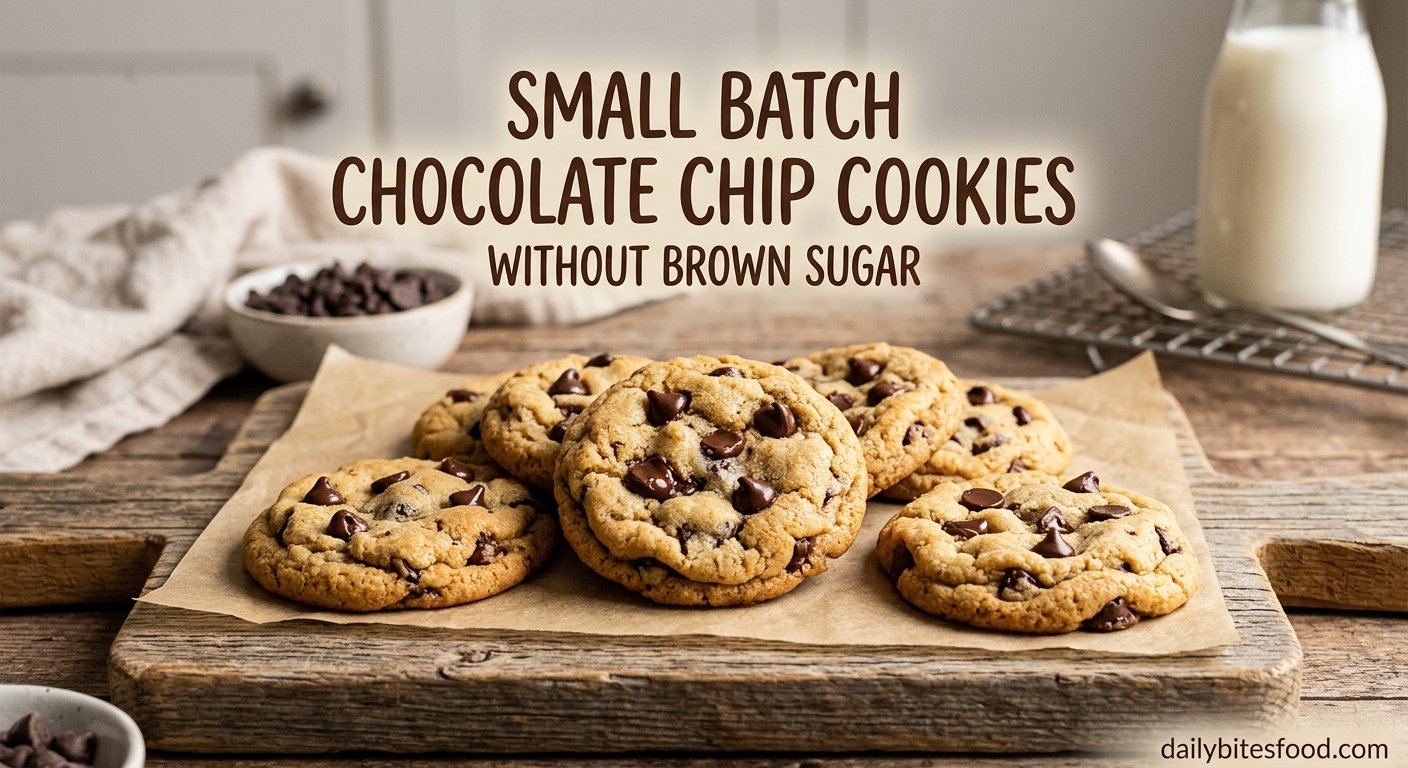
small batch chocolate chip cookies without brown sugar
Sometimes, you want homemade chocolate chip cookies without making a huge batch or buying extra ingredients. Maybe you have a little butter, a handful of chocolate chips, and some regular white sugar in your kitchen. The good news is that you can make delicious small batch chocolate chip cookies without brown sugar using simple pantry ingredients.
These cookies are buttery, sweet, and filled with melted chocolate chips. They have lightly crisp edges and soft, chewy centers when baked correctly. Best of all, this recipe makes a small number of cookies, so you can enjoy a fresh homemade dessert without ending up with a full container of leftovers.
Brown sugar is commonly used in chocolate chip cookies because its molasses content adds moisture, flavor, and chewiness. However, it is not essential for making delicious cookies. Regular granulated sugar works beautifully when the ingredients are measured carefully and the dough is prepared properly.
Whether you are baking for yourself, sharing a treat with a friend, or satisfying a late-night cookie craving, this easy recipe is worth keeping in your collection.
Why You Will Love These Small Batch Chocolate Chip Cookies
There are plenty of reasons to try this recipe, especially if you enjoy homemade desserts that require minimal effort.
No brown sugar required: You can make these cookies using ordinary white granulated sugar. There is no need to visit the grocery store or substitute complicated ingredients.
Perfect for small households: The recipe makes approximately 6–8 cookies, depending on how large you scoop the dough. It is ideal when you want a sweet treat without preparing a large batch.
Simple pantry ingredients: You probably already have most of the ingredients in your kitchen, including flour, butter, sugar, and chocolate chips.
Quick and beginner-friendly: The preparation is straightforward, making this recipe suitable for new bakers and experienced home cooks alike.
Crisp edges and soft centers: With the right baking time, these cookies develop golden edges while remaining tender in the middle.
Easy to customize: You can add chopped nuts, dark chocolate, or a pinch of cinnamon to create a slightly different flavor.
Ingredients for Small Batch Chocolate Chip Cookies Without Brown Sugar
One of the best things about this recipe is its short ingredient list. Each ingredient has a purpose, so measuring carefully will help you achieve consistent results.
Ingredients
- 4 tablespoons unsalted butter, softened
- ¼ cup granulated white sugar
- 1 large egg yolk
- ½ teaspoon vanilla extract
- ½ cup all-purpose flour, spooned and leveled
- ⅛ teaspoon baking soda
- A small pinch of salt
- ¼ cup chocolate chips, plus a few extra for topping
This recipe uses only an egg yolk rather than a whole egg. Because the batch is small, using an entire egg could introduce too much moisture and make the dough overly soft. The yolk contributes richness and helps create a tender cookie texture.
If you use salted butter, you can reduce or omit the additional salt.
For the chocolate, semi-sweet chips provide a balanced flavor, but milk chocolate or dark chocolate chips are equally delicious.
How to Make Small Batch Chocolate Chip Cookies Without Brown Sugar
Follow these simple steps to prepare a small batch of homemade cookies with golden edges and soft centers.
Step 1: Preheat the Oven
Preheat your oven to 350°F (175°C). Line a baking sheet with parchment paper to prevent sticking and make cleanup easier.
Allow the oven to heat fully before baking. Placing cookie dough into an oven that has not reached the correct temperature can affect spreading and browning.
Step 2: Cream the Butter and Sugar
Place the softened butter and granulated sugar in a medium mixing bowl.
Using a spoon, spatula, or hand mixer, mix them until the mixture looks creamy and well combined. This usually takes about one to two minutes with softened butter.
You do not need to whip the mixture excessively. The goal is to distribute the sugar evenly through the butter and create a smooth base for the cookie dough.
Because this recipe does not contain brown sugar, the flavor will be cleaner and more buttery, with a slightly lighter color.
Step 3: Add the Egg Yolk and Vanilla
Add the egg yolk and vanilla extract to the butter mixture.
Stir until everything is fully incorporated. Scrape down the sides of the bowl if necessary so that no butter or sugar remains stuck around the edges.
The egg yolk provides richness and helps bind the ingredients together. Vanilla adds warmth and enhances the flavor of the chocolate chips.
Step 4: Combine the Dry Ingredients
In a separate small bowl, combine the all-purpose flour, baking soda, and salt.
Mix briefly with a fork to distribute the baking soda evenly throughout the flour.
Gradually add the dry ingredients to the wet mixture. Stir gently until a soft dough forms.
Avoid overmixing once the flour has been added. Excessive mixing can develop gluten and make the finished cookies tougher than desired.
If the dough appears slightly thick, that is normal. It should be soft enough to scoop but firm enough to hold its shape.
Step 5: Fold in the Chocolate Chips
Add the chocolate chips to the dough and fold them in with a spatula or spoon.
Try to distribute the chocolate evenly so that every cookie contains a good amount.
For a bakery-style appearance, reserve a few chocolate chips and press them gently into the tops of the dough balls before baking.
This small detail makes the finished cookies look attractive without requiring any special decorating skills.
Step 6: Shape the Cookie Dough
Divide the dough into approximately 6–8 portions, depending on your preferred cookie size.
Roll each portion into a loose ball and place it on the prepared baking sheet. Leave about two inches between the dough balls because the cookies will spread during baking.
If your kitchen is warm and the dough feels very soft, refrigerate it for approximately 15–20 minutes before baking.
Chilling is not always necessary, but it can help control spreading and improve the final texture.
Step 7: Bake the Cookies
Place the baking sheet in the preheated oven and bake for approximately 9–12 minutes.
The exact baking time depends on the size of your cookies and the characteristics of your oven.
Look for lightly golden edges while the centers still appear slightly soft. Do not wait until the entire cookie looks completely firm, because the cookies will continue setting as they cool.
If you prefer crispier cookies, you can leave them in the oven for another minute or two, watching carefully to prevent overbrowning.
Step 8: Let the Cookies Cool
Remove the baking sheet from the oven and allow the cookies to rest for about five minutes.
They may look delicate when they first come out, but this is normal. As they cool, the centers will firm up while retaining a pleasant softness.
Transfer the cookies to a cooling rack if desired.
For the best experience, enjoy one while it is still slightly warm and the chocolate chips are soft and melted.
What Makes These Cookies Work Without Brown Sugar?
Brown sugar is popular in traditional chocolate chip cookie recipes because it contains molasses. That molasses contributes a deeper caramel-like flavor and helps retain moisture.
White sugar behaves differently. It produces a cleaner sweetness and often encourages more spreading and crispness.
However, the absence of brown sugar does not mean your cookies will be dry or tasteless.
Several ingredients help create a satisfying texture in this small batch recipe.
Butter adds flavor and tenderness. Properly softened butter combines easily with sugar and contributes to the rich taste of homemade cookies.
The egg yolk adds richness. Using only the yolk provides fat and binding without adding as much moisture as a whole egg.
Accurate flour measurement prevents dryness. Too much flour can make small cookies dense and crumbly, so measuring carefully is important.
Chocolate chips add sweetness and contrast. Their creamy texture and chocolate flavor balance the lightly crisp cookie edges.
Correct baking time protects the center. Removing the cookies when their centers are still slightly soft helps prevent them from becoming overly dry.
Together, these ingredients create a delicious cookie even without the deeper flavor of brown sugar.
Tips for Perfect Small Batch Chocolate Chip Cookies
A few simple baking techniques can make a noticeable difference in your results.
Measure the Flour Correctly
One of the most common cookie mistakes is adding too much flour.
Instead of dipping your measuring cup directly into the flour container, spoon the flour into the cup and level it with a straight edge.
This helps prevent tightly packed flour from making the dough too dry.
If you have a kitchen scale, weighing your ingredients can provide even more consistent results.
Use Softened Butter
Butter should be soft enough to press with a finger but not melted or greasy.
If the butter is too cold, it may not combine smoothly with the sugar. If it is melted, the dough may spread excessively during baking.
For best results, let refrigerated butter soften at room temperature before mixing.
Avoid Overbaking
Cookies often continue baking slightly after they leave the oven because the baking sheet remains hot.
Remove them when the edges look set and lightly golden while the centers remain a little soft.
This is particularly important when making a small batch because smaller cookies can overbake quickly.
Chill the Dough When Necessary
If your cookies consistently spread too much, refrigerate the dough for 15–30 minutes before baking.
Chilling helps firm up the butter and can make the dough easier to handle.
It is especially useful during warm weather or when your kitchen is hot.
Add Extra Chocolate on Top
Pressing a few additional chocolate chips into each dough ball before baking creates an attractive finish.
You can also sprinkle a tiny amount of flaky salt over the cookies after baking if you enjoy a sweet-and-salty flavor combination.
Know Your Oven
Ovens do not always heat exactly as indicated by their temperature settings.
If your cookies brown too quickly, check your oven temperature and consider reducing the baking time. If they remain pale and underbaked, they may need another minute or two.
Common Mistakes to Avoid
Even a simple cookie recipe can be affected by small preparation errors.
Using too much flour: Excess flour can produce dry, thick cookies that lack tenderness. Measure carefully and avoid packing the flour into the measuring cup.
Using melted butter: Melted butter can cause the cookies to spread more than expected. Use softened butter unless the recipe specifically calls for melted butter.
Adding a whole egg: This particular recipe is designed around one egg yolk. Adding a whole egg introduces additional moisture and may change the texture.
Overmixing the dough: Mix only until the ingredients come together. Once the flour is added, gentle mixing helps keep the cookies tender.
Baking until completely firm: Cookies that look fully firm inside the oven may become too crisp once cooled. Remove them when the centers still look slightly soft.
Placing dough on a hot baking sheet: If you bake a second batch, let the baking sheet cool first. A hot sheet can melt the butter before the cookies reach the oven.
Variations to Try
Once you have mastered the basic recipe, you can easily adjust it to suit your preferences.
Double Chocolate Chip Cookies
Replace one tablespoon of flour with one tablespoon of unsweetened cocoa powder. Mix thoroughly before adding the chocolate chips.
The result is a richer chocolate cookie with extra chocolate flavor.
Chocolate Chip Cookies with Nuts
Add one or two tablespoons of chopped walnuts or pecans to the dough.
Nuts introduce a pleasant crunch and complement the buttery flavor.
Dark Chocolate Cookies
Use dark chocolate chips or roughly chopped dark chocolate instead of semi-sweet chips.
This variation is ideal if you prefer a less sweet dessert.
Cinnamon Chocolate Chip Cookies
Add a small pinch of ground cinnamon to the dry ingredients.
Cinnamon adds a subtle warmth that pairs especially well with chocolate.
Extra-Crispy Cookies
For a crispier result, make the dough portions slightly smaller and bake them until the edges are more deeply golden.
Keep a close eye on the cookies during the final minutes because the difference between crisp and overbaked can be small.
Dairy-Free Variation
You can experiment with a plant-based butter alternative that is suitable for baking. Choose a product with a similar consistency to regular butter, as very soft spreads may cause excess spreading.
Check the labels on your chocolate chips as well, since some varieties contain milk.
The texture may differ slightly from the original recipe, so you may need to adjust the chilling time.
How to Store Small Batch Chocolate Chip Cookies
If you have a few cookies left, storing them correctly helps preserve their flavor and texture.
Allow the cookies to cool completely before placing them in an airtight container. Store the container at room temperature, away from direct sunlight and heat.
For the best texture, enjoy the cookies within three to four days.
If the cookies become slightly firm, you can warm one briefly in the microwave. Start with approximately five to eight seconds, checking carefully because chocolate can become very hot.
You can also freeze the baked cookies in a freezer-safe container. Separate layers with parchment paper to prevent sticking, and use them within about two months for the best quality.
Allow frozen cookies to thaw at room temperature or warm them gently before serving.
Can You Freeze the Cookie Dough?
Yes, freezing cookie dough is a convenient way to prepare a quick dessert later.
Shape the dough into individual portions and arrange them on a parchment-lined tray. Freeze until firm, then transfer the portions to a freezer-safe bag or container.
Label the container with the date so you can keep track of storage time.
When you want freshly baked cookies, bake the dough portions from frozen, adding a little extra baking time as needed. Check the centers and edges carefully rather than relying only on the clock.
For the best results, avoid leaving frozen dough exposed to air for long periods because it can develop freezer odors or lose quality.
What to Serve with These Cookies
These homemade cookies are delicious on their own, but they also pair well with simple drinks and desserts.
- Cold milk: A classic choice that balances the sweetness of chocolate.
- Hot coffee: The slightly bitter flavor of coffee complements buttery cookies.
- Tea: Black tea or a mild chai makes a comforting afternoon pairing.
- Vanilla ice cream: Serve a warm cookie alongside a small scoop for an easy dessert.
- Fresh strawberries: Their fruity flavor adds freshness to a plate of chocolate chip cookies.
You do not need an elaborate dessert spread. Even one warm cookie and your favorite drink can feel like a special treat.
Frequently Asked Questions
Can I Make Chocolate Chip Cookies Without Brown Sugar?
Yes. Granulated white sugar works well in chocolate chip cookies. The flavor and texture may differ slightly from cookies made with brown sugar, but you can still achieve delicious results with buttery flavor, crisp edges, and soft centers.
Will These Cookies Taste Different Without Brown Sugar?
Yes, the flavor will be somewhat different. Brown sugar contributes molasses notes and a deeper caramel-like taste. Cookies made with white sugar generally have a cleaner sweetness and may develop crisper edges.
Vanilla, butter, and chocolate chips provide plenty of flavor in this small batch recipe.
Why Did My Cookies Spread Too Much?
Excessive spreading can happen when the butter is too warm, the dough is too soft, or the flour is incorrectly measured.
Try chilling the dough for 15–30 minutes before baking. Also, make sure your baking sheet is cool and that you are measuring the flour accurately.
Can I Make These Cookies Without a Mixer?
Absolutely. A spoon, spatula, and mixing bowl are enough.
Make sure the butter is softened so you can combine it easily with the sugar. Mix thoroughly, but avoid overworking the dough after adding the flour.
Can I Use Milk Chocolate Chips?
Yes. Milk chocolate chips work well and create a sweeter cookie. Semi-sweet chocolate offers a more balanced flavor, while dark chocolate provides a richer, less sweet result.
Choose whichever variety you enjoy most.
Can I Double This Recipe?
Yes. You can double the ingredients to make approximately 12–16 cookies, depending on their size.
For consistent results, mix the ingredients thoroughly and bake in batches if necessary. Avoid overcrowding the baking sheet.
Why Are My Cookies Dry or Crumbly?
Dry or crumbly cookies often result from excess flour, overbaking, or inaccurate measurements.
Use the spoon-and-level method for flour, check the cookies near the end of the suggested baking time, and allow them to cool on the baking sheet before moving them.
Do I Need to Chill the Dough?
Not necessarily. If the dough is firm and easy to shape, you can bake it immediately.
However, chilling is helpful when the dough is very soft or when you want to reduce spreading.
Can I Make This Recipe Without Vanilla Extract?
Yes. Vanilla adds flavor but is not essential for the structure of the cookies. You can omit it if you do not have any available, although the finished cookies may taste slightly less aromatic.
How Do I Know When the Cookies Are Done?
Look for edges that are lightly golden and set, with centers that still appear a little soft. The cookies will continue to firm up as they cool.
Avoid waiting until the entire surface becomes dark golden unless you prefer a crispier cookie.
Final Thoughts
Making small batch chocolate chip cookies without brown sugar is a simple way to enjoy a homemade dessert with everyday ingredients. You do not need a large amount of butter, a full bag of sugar, or special baking equipment to create something delicious.
This recipe uses white granulated sugar, softened butter, an egg yolk, flour, vanilla, and chocolate chips to make approximately 6–8 satisfying cookies. The preparation is easy, the baking time is short, and the finished cookies are perfect for an afternoon snack or a late-night craving.
For the best results, measure the flour carefully, use softened rather than melted butter, and remove the cookies while their centers are still slightly soft. These small details help create the contrast between golden edges and tender centers that makes chocolate chip cookies so enjoyable.
The next time you crave homemade cookies but do not have brown sugar in your pantry, give this small batch recipe a try. With a few basic ingredients and less than half an hour of active preparation and baking, you can enjoy warm, chocolate-filled cookies without making more than you need.