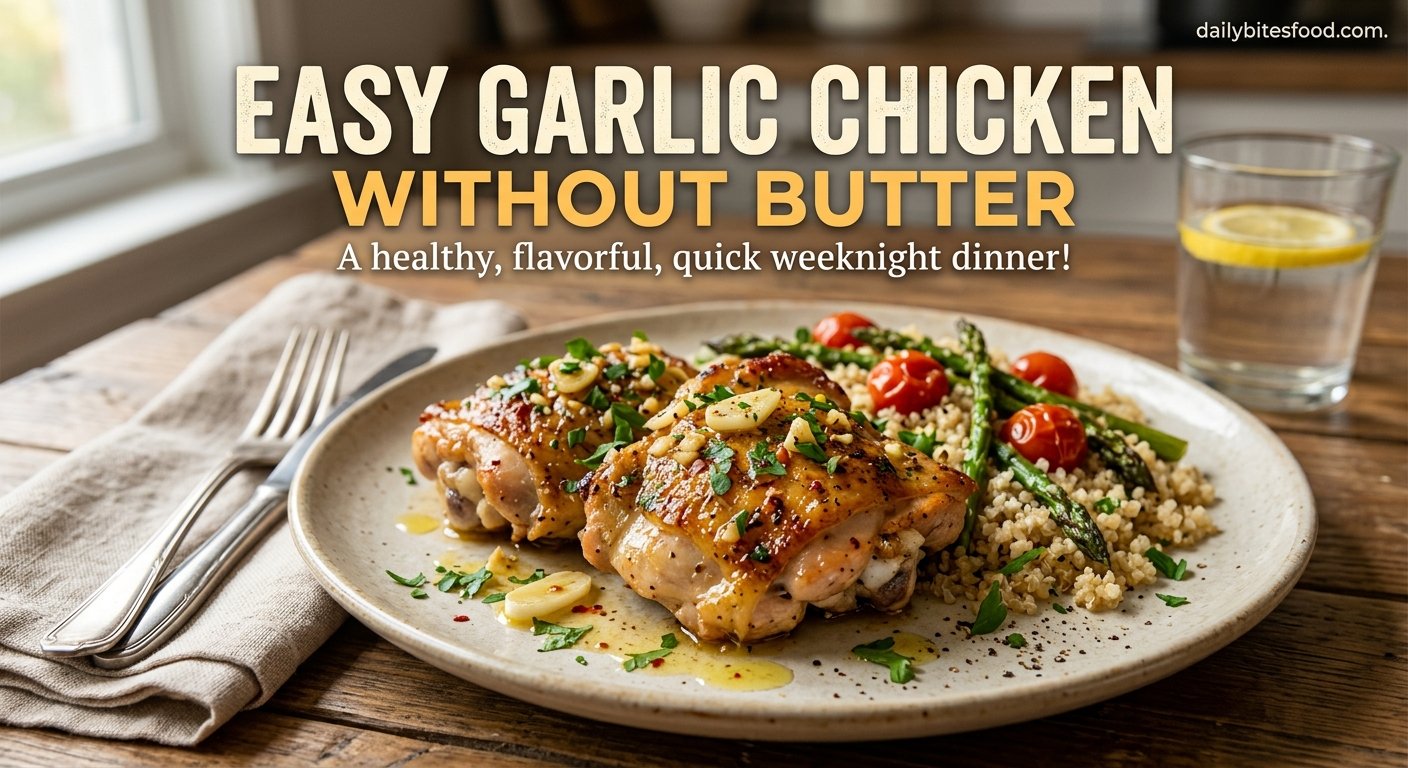
Easy Garlic Chicken Without Butter – Juicy, Flavorful, and Simple
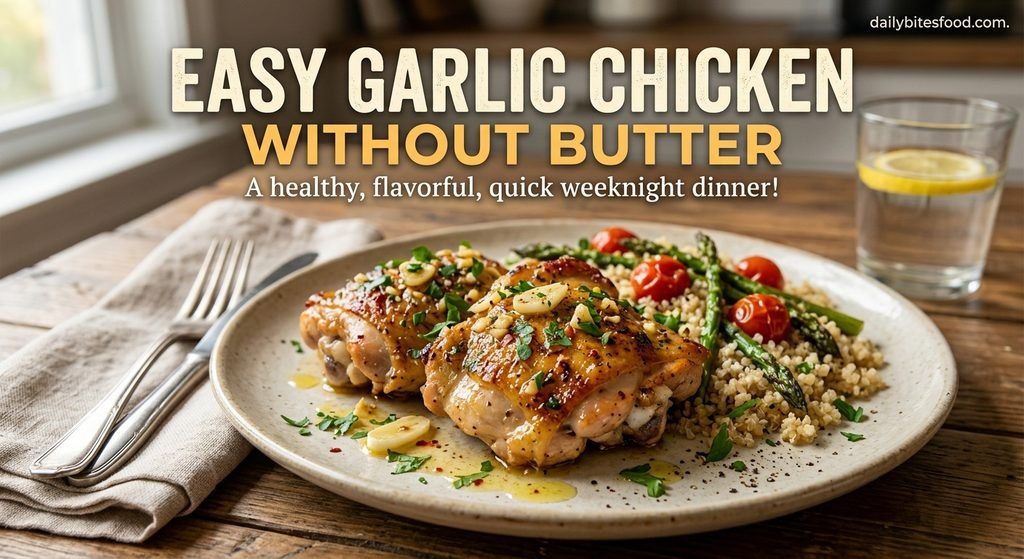
If you love garlic chicken but want to prepare it without butter, this easy garlic chicken without butter recipe is perfect for your next lunch or dinner. It uses simple ingredients, fresh garlic, a little olive oil, and everyday seasonings to create tender, juicy chicken with plenty of flavor. You do not need expensive ingredients, complicated cooking techniques, or hours in the kitchen to make this delicious meal.
One of the best things about this recipe is its versatility. You can serve garlic chicken with rice, roasted vegetables, mashed potatoes, pasta, or a fresh salad. It works equally well for a quick weeknight dinner, a meal-prep lunch, or a simple family meal.
Although butter is often used in traditional garlic chicken recipes, you can achieve excellent flavor without it. Olive oil helps the seasonings coat the chicken, while fresh garlic provides a rich aroma and savory taste. A little lemon juice adds brightness and balances the garlic beautifully.
In this guide, you will learn how to make easy garlic chicken without butter, which ingredients work best, how to keep the chicken juicy, and how to customize the recipe according to your preferences.
Why You Will Love This Easy Garlic Chicken Without Butter
There are plenty of reasons to add this recipe to your regular dinner rotation.
First, it is easy to prepare. The ingredients are simple, and most of the cooking happens in one skillet. You can prepare everything in approximately 30 minutes, making it a convenient option for busy evenings.
Second, it delivers plenty of flavor without butter. Fresh garlic, olive oil, black pepper, paprika, and lemon juice create a delicious combination. You will not feel that the recipe is missing anything.
Third, it uses everyday ingredients. You probably already have several of these ingredients in your kitchen. If you cook chicken regularly, you may only need to purchase fresh garlic or lemons.
Fourth, it is easy to customize. You can make it spicy with red pepper flakes, add herbs for a Mediterranean flavor, or prepare a simple garlic sauce using chicken broth.
Finally, this recipe pairs well with many different side dishes. You can change the sides throughout the week and enjoy the same garlic chicken in several ways.
Ingredients for Easy Garlic Chicken Without Butter
The secret to delicious garlic chicken is using a few ingredients that complement each other instead of overwhelming the natural flavor of the chicken.
Ingredients
- 1 pound boneless, skinless chicken breasts or chicken thighs
- 1 tablespoon olive oil
- 5–6 garlic cloves, finely minced
- 1/2 teaspoon salt, or to taste
- 1/2 teaspoon black pepper
- 1 teaspoon paprika
- 1/2 teaspoon onion powder
- 1 tablespoon fresh lemon juice
- 1/3 cup low-sodium chicken broth or water
- 1 teaspoon dried parsley or 1 tablespoon fresh parsley
- 1/2 teaspoon dried oregano, optional
- Red pepper flakes, optional
These ingredients make a flavorful garlic chicken dish without butter. The olive oil provides enough fat to help brown the chicken, while the broth creates a light pan sauce.
Choosing the Best Chicken
Boneless, skinless chicken breasts are an excellent choice if you prefer lean meat and quick cooking. However, chicken breasts can become dry if they are overcooked.
Chicken thighs are another great option because they tend to remain juicy and have a richer flavor. They may require slightly longer cooking, depending on their thickness.
For the most even results, choose chicken pieces of similar size. If your chicken breasts are thick, slice them horizontally into thinner cutlets or gently pound them to an even thickness.
Why Fresh Garlic Matters
Fresh garlic is the main flavor in this recipe. When cooked gently, it becomes aromatic and develops a pleasant savory taste.
You can use pre-minced garlic if that is what you have available, but freshly minced garlic usually provides a stronger aroma. Garlic powder can also be used in the seasoning mixture, although it will not completely replace the flavor of fresh garlic.
Be careful not to burn the garlic. Burnt garlic can taste bitter and may affect the entire dish.
What Can You Use Instead of Olive Oil?
If you do not have olive oil, you can use another neutral cooking oil, such as canola or sunflower oil. Use a similar quantity and make sure the oil is suitable for skillet cooking.
You can also reduce the oil slightly if you prefer, but using a small amount makes it easier to brown the chicken and helps prevent sticking. The result will depend on your pan and cooking method.
How to Make Easy Garlic Chicken Without Butter
Follow these straightforward steps to prepare juicy, flavorful chicken with a light garlic sauce.
Step 1: Prepare the Chicken
Pat the chicken dry with paper towels. Removing excess surface moisture helps the chicken brown instead of steaming in the skillet.
If you are using chicken breasts, cut them into evenly sized cutlets or pieces. Try to keep the thickness consistent so that every piece cooks at approximately the same rate.
Season both sides with salt, black pepper, paprika, and onion powder. Add oregano if you enjoy a slightly herbal flavor.
Let the seasoned chicken rest for five minutes while you prepare the garlic and other ingredients.
Step 2: Heat the Olive Oil
Place a large skillet over medium heat and add the olive oil.
Allow the oil to heat until it moves easily across the surface of the pan. Avoid letting it smoke.
Carefully place the chicken in the skillet in a single layer. If necessary, cook it in batches rather than crowding the pan.
Crowding releases moisture and makes browning more difficult. Giving each piece enough space helps create a more flavorful exterior.
Step 3: Brown the Chicken
Cook the chicken for approximately 4–6 minutes on the first side, depending on its thickness. Turn it over and cook the other side for another 3–5 minutes.
These times are estimates, not guarantees. Thick chicken pieces may need more time, while thin cutlets cook more quickly.
The chicken should develop a light golden-brown surface. It does not need to be completely cooked through at this stage because you will finish cooking it in the garlic sauce.
Transfer the browned chicken to a clean plate temporarily if your skillet is too crowded to add the garlic comfortably.
Step 4: Add the Fresh Garlic
Reduce the heat to medium-low. Add the minced garlic to the skillet and stir for approximately 30–60 seconds.
The garlic should become fragrant without turning dark brown.
If the skillet is very dry, add a small splash of chicken broth or water to prevent the garlic from burning. Stir gently and scrape up any flavorful browned bits from the bottom of the pan.
These browned bits help give the finished sauce a richer taste without using butter.
Step 5: Make the Garlic Sauce
Pour the chicken broth into the skillet and stir to combine it with the garlic.
Add the lemon juice and red pepper flakes if desired. Let the mixture simmer gently for one or two minutes.
The broth creates a light, savory sauce that coats the chicken. If you prefer a stronger garlic flavor, you can add a little extra garlic near the end of cooking, allowing it to heat gently without burning.
Step 6: Finish Cooking the Chicken
Return the chicken to the skillet if you removed it earlier. Turn the pieces so they are coated with the garlic sauce.
Cover the skillet loosely and continue cooking over medium-low heat until the chicken reaches an internal temperature of 165°F (74°C) at its thickest point.
A food thermometer is the most reliable way to check doneness. Avoid relying only on the color of the meat or a fixed cooking time.
Once the chicken is cooked, remove the skillet from the heat. Sprinkle fresh parsley over the top and spoon some of the garlic sauce over each piece.
Step 7: Rest and Serve
Let the chicken rest for approximately three to five minutes before serving.
This short resting period helps the juices settle and makes the chicken easier to slice.
Serve the chicken warm with rice, vegetables, potatoes, or your favorite side dish. Spoon the remaining garlic sauce over the chicken just before serving for extra flavor.
Tips for Juicy Garlic Chicken Without Butter
Even a simple recipe can turn out differently depending on how you handle the chicken. These practical tips will help you get consistent results.
Do Not Overcook the Chicken
Overcooking is one of the most common reasons chicken becomes dry. Chicken breasts are particularly sensitive because they contain less fat than thighs.
Use a food thermometer to check that the thickest portion reaches 165°F (74°C). Remove the chicken from the heat once it reaches that temperature.
Cut the Chicken Evenly
Uneven pieces cook at different rates. Thin sections may become dry while thicker sections are still cooking.
Cutting the chicken into evenly sized portions helps the entire batch cook more consistently.
Keep the Garlic at the Right Temperature
Garlic cooks much faster than chicken. If you add it while the pan is extremely hot, it can burn within seconds.
Lower the heat before adding garlic, and stir it frequently. Add the broth as soon as the garlic becomes fragrant.
Do Not Skip the Lemon Juice
Lemon juice gives the sauce a fresh, slightly tangy taste that balances the savory garlic.
If you prefer a milder flavor, start with half a tablespoon and add more after tasting the sauce.
Use Chicken Broth for More Flavor
Water works well if you do not have chicken broth, but broth generally creates a more savory sauce.
Choose low-sodium broth if you want better control over the salt level. You can always add more seasoning at the end.
Variations to Try
One advantage of easy garlic chicken without butter is that you can adjust the recipe without changing the basic cooking method.
Lemon Garlic Chicken
For a brighter flavor, increase the lemon juice slightly and add a little lemon zest. Finish with fresh parsley and serve with steamed vegetables or rice.
This version is particularly good for spring and summer dinners when you want something fresh and simple.
Spicy Garlic Chicken
Add 1/4 teaspoon of red pepper flakes to the sauce. Increase the amount gradually if you prefer a stronger kick.
You can also add a small amount of cayenne pepper to the dry seasoning mixture.
Serve spicy garlic chicken with plain rice or potatoes to balance the heat.
Garlic Herb Chicken
Add dried oregano, thyme, or rosemary to the seasoning mixture. Use one or two herbs rather than adding too many at once.
Fresh parsley works well as a finishing garnish because it adds color and a fresh herbal taste.
Garlic Chicken with Vegetables
You can turn this recipe into a complete skillet meal by adding sliced bell peppers, zucchini, mushrooms, or broccoli.
Brown the chicken first and set it aside. Cook the vegetables until they begin to soften, then add the garlic and broth. Return the chicken to the skillet and finish cooking.
For firmer vegetables, add them earlier. For tender vegetables such as zucchini, add them closer to the end.
Make sure the chicken reaches a safe internal temperature before serving.
Creamy-Style Garlic Chicken Without Cream or Butter
If you want a thicker sauce without using butter or heavy cream, mix one teaspoon of cornstarch with one tablespoon of cold water.
Stir the mixture into the gently simmering broth and cook until the sauce thickens. Add a little more broth if it becomes too thick.
This creates a smooth, glossy sauce without dairy. It will not taste exactly like a traditional cream sauce, but it provides a satisfying alternative.
What to Serve with Garlic Chicken Without Butter
This recipe works with a wide range of side dishes, so you can build a different meal around it each time.
Rice: Plain white rice, brown rice, or seasoned rice absorbs the garlic sauce beautifully.
Roasted potatoes: Oven-roasted potato cubes or wedges add a crisp texture to the meal.
Steamed vegetables: Broccoli, carrots, green beans, and cauliflower make simple, colorful side dishes.
Pasta: Toss cooked pasta with a little of the garlic pan sauce and some chopped parsley for a quick dinner.
Fresh salad: A salad made with lettuce, cucumber, tomatoes, and a lemon dressing provides a refreshing contrast.
Mashed potatoes: Serve the chicken over mashed potatoes prepared with olive oil or broth instead of butter.
For a balanced plate, combine chicken with a vegetable side and a carbohydrate such as rice or potatoes.
How to Store and Reheat Leftover Garlic Chicken
Leftovers make this recipe even more useful for busy households.
Refrigerating
Allow the chicken to cool slightly, then place it in a shallow, airtight container. Refrigerate it within two hours of cooking.
Properly refrigerated cooked chicken should generally be eaten within three to four days.
Store the chicken with its garlic sauce to help preserve moisture.
Freezing
For longer storage, freeze the cooled chicken in a freezer-safe container or tightly sealed bag. Include some sauce to help protect the meat from drying out.
For best quality, use frozen cooked chicken within two to three months. Label the container with the date so you can keep track of storage time.
Thaw frozen chicken in the refrigerator rather than leaving it on the kitchen counter.
Reheating
The easiest way to reheat garlic chicken is in a covered skillet over low heat.
Add one or two tablespoons of water or chicken broth, cover the pan, and heat gently until the chicken reaches 165°F (74°C).
You can also use a microwave. Place the chicken in a microwave-safe dish, add a little sauce, cover loosely, and heat in short intervals, turning or rearranging the pieces as needed.
Avoid reheating the chicken for longer than necessary because repeated or excessive heating can make it dry.
Common Mistakes to Avoid
A few small mistakes can affect the taste and texture of your garlic chicken.
Using too much heat: High heat can burn garlic and leave the outside of the chicken overcooked before the inside is ready.
Adding garlic too early: Garlic should generally be added after the chicken has developed some color. This reduces the risk of burning.
Crowding the skillet: Too many pieces at once can prevent proper browning. Cook in batches if needed.
Using too much lemon juice: Lemon should brighten the sauce rather than overpower the garlic. Start with the recommended quantity and adjust to taste.
Skipping the thermometer: Cooking times vary with the thickness of the chicken, the pan, and the heat level. Check the internal temperature rather than assuming the chicken is done after a certain number of minutes.
Leaving the chicken uncovered for too long: Once the broth is added, gentle covered cooking helps the chicken finish cooking without losing too much moisture.
Is Garlic Chicken Without Butter Healthy?
Garlic chicken without butter can fit into a balanced eating pattern, depending on the ingredients and serving size.
Chicken provides protein, while garlic contributes flavor without requiring a heavy sauce. Olive oil supplies unsaturated fats, and adding vegetables can increase the meal’s fiber, vitamins, and mineral content.
However, removing butter does not automatically make a recipe low in calories or suitable for every dietary need. The amount of oil, the chicken cut, the portion size, and the accompanying side dishes all influence the overall nutritional value.
If you are monitoring sodium, use low-sodium broth and adjust the added salt. If you need to avoid dairy completely, check the labels on your broth and seasonings to ensure they meet your requirements.
For a lighter meal, serve the chicken with steamed vegetables and a moderate portion of rice or potatoes.
Frequently Asked Questions
Can I Make Garlic Chicken Without Butter and Olive Oil?
Yes. You can use a good nonstick skillet and a small amount of broth or water to cook the chicken. However, the chicken may not brown as deeply, and you will need to monitor the pan carefully to prevent sticking.
Can I Use Garlic Powder Instead of Fresh Garlic?
Yes. Garlic powder is convenient when fresh garlic is unavailable. Start with approximately 1/2 teaspoon of garlic powder, then adjust according to taste. For a more complex flavor, combine a little garlic powder with fresh minced garlic if available.
Can I Make This Recipe with Chicken Thighs?
Absolutely. Boneless, skinless chicken thighs work very well and tend to remain juicy. Adjust the cooking time according to their size and thickness, and check that the thickest portion reaches 165°F (74°C).
How Do I Make the Garlic Sauce Thicker?
Mix one teaspoon of cornstarch with one tablespoon of cold water. Stir it into the simmering sauce and cook briefly until thickened. Add the mixture gradually so the sauce does not become too thick.
Can I Prepare Garlic Chicken Ahead of Time?
Yes. You can season the chicken and mince the garlic several hours ahead. Store the raw chicken covered in the refrigerator and keep it separate from ready-to-eat ingredients.
For the freshest flavor and best texture, cook the chicken shortly before serving. You can also prepare the complete recipe ahead and reheat it gently when needed.
What Is the Best Oil for Garlic Chicken?
Olive oil is a convenient option because it provides a pleasant flavor and works well for medium-heat skillet cooking. Canola or sunflower oil can also be used if you prefer a more neutral taste.
Can I Make Garlic Chicken in an Air Fryer?
Yes, although the result will be slightly different from skillet-cooked chicken. Season the chicken with oil, garlic, and spices, then air-fry according to the size and thickness of the pieces. To prevent the garlic from burning, use finely minced garlic cautiously or apply part of the garlic mixture during the final stage of cooking. Always check that the chicken reaches 165°F (74°C).
Is This Recipe Suitable for Meal Prep?
Yes. Divide the cooked chicken, sauce, and side dishes into individual containers. Refrigerate promptly and use within three to four days. Keep the sauce with the chicken to help maintain moisture when reheating.
Easy Garlic Chicken Without Butter Recipe Card
Prep Time: 10 minutes
Cook Time: 15–20 minutes
Total Time: Approximately 25–30 minutes
Servings: 2–3
Cooking Method: Skillet
Dietary Notes: Made without butter; can be dairy-free when all packaged ingredients are dairy-free.
Ingredients
- 1 pound boneless, skinless chicken
- 1 tablespoon olive oil
- 5–6 minced garlic cloves
- 1/2 teaspoon salt
- 1/2 teaspoon black pepper
- 1 teaspoon paprika
- 1/2 teaspoon onion powder
- 1 tablespoon lemon juice
- 1/3 cup chicken broth or water
- Fresh parsley for garnish
Instructions
- Pat the chicken dry and season it with salt, pepper, paprika, and onion powder.
- Heat the olive oil in a skillet over medium heat.
- Add the chicken and brown both sides, adjusting the cooking time to the thickness of the pieces.
- Lower the heat and add the minced garlic. Stir for 30–60 seconds until fragrant.
- Pour in the chicken broth and lemon juice, scraping up the browned bits from the pan.
- Return the chicken to the skillet if necessary and simmer gently until it reaches an internal temperature of 165°F (74°C).
- Sprinkle with fresh parsley and let the chicken rest for three to five minutes.
- Serve with your favorite side dishes and spoon the garlic sauce over the top.
Recipe Tip: For the best flavor, use fresh garlic, avoid high heat when cooking it, and do not overcook the chicken.
Final Thoughts
This easy garlic chicken without butter recipe proves that you do not need butter or a complicated ingredient list to make a satisfying homemade dinner. Fresh garlic, olive oil, simple seasonings, lemon juice, and a little broth are enough to create tender chicken with a flavorful sauce.
Whether you serve it with rice, potatoes, vegetables, or pasta, this recipe is easy to adapt to your family’s preferences. You can make it spicy, add fresh herbs, or include vegetables for a complete skillet meal.
The next time you need a quick and dependable dinner, give this garlic chicken recipe a try. With simple preparation, flexible ingredients, and a few helpful cooking techniques, you can make a delicious meal that fits naturally into your everyday routine.