Baked Plums with Cinnamon and Brown Sugar
There are some desserts that ask a lot of you. They want pastry chilled and rolled, egg whites whipped to stiff peaks, and a timer watched like a hawk. And then there are desserts like this one, which ask for almost nothing and still manage to make the whole house smell wonderful. Baked plums with cinnamon and brown sugar fall firmly into that second group. You halve a few plums, sprinkle over sugar and spice, slide the dish into a hot oven, and twenty minutes later you have something soft, jammy, and glossy with syrup, ready to be spooned into bowls with cream or ice cream. It is the kind of pudding I turn to when I want something sweet at the end of the day but I do not want a project.
I first made baked plums on a late summer evening when a punnet of them was sitting on the counter, a little too ripe to eat out of hand and far too good to waste. Plums have this funny way of going from firm and promising to soft and bruised in what feels like a day, and the oven is honestly the kindest thing you can do for them at that point. The heat softens the flesh, the skins wrinkle and deepen in colour, and the juices run out and mix with the sugar to make a sauce that tastes far more complicated than it is. A spoonful of that syrup over the top of a warm plum half is genuinely one of the best things you can eat with a spoon in September, or in any month when plums are good.
What makes this particular version so good is the pairing of brown sugar and cinnamon. White sugar would sweeten the plums, of course, but brown sugar does something else entirely. It melts into the plum juices and turns into a dark, caramel-like syrup with a hint of molasses, and that warmth sits beautifully against the tart edge of the fruit. Cinnamon brings the same kind of warmth from a different direction, all spice and comfort, and the two together make the plums taste like autumn even when it is still warm outside. A little lemon zest keeps everything from getting too sweet, and a knob of butter dotted over the top helps the syrup turn glossy and rich. It is a short list of ingredients, but every one of them earns its place.
This is also a dessert that fits easily into a normal evening. It takes about ten minutes to put together, and while it bakes you can clear the table, wash the few dishes from dinner, and put the kettle on. It works just as well after a simple weeknight supper — something like this easy garlic chicken without butter — as it does at the end of a Sunday lunch with the whole family around the table. You can make it for two people or scale it up for a crowd, dress it up with ice cream and a crumble topping, or keep it plain and eat it warm from the dish with a spoon. However you serve it, the plums are the star, and the cinnamon and brown sugar are there to make them shine.
Ingredients You’ll Need
- 8 ripe but firm plums (about 600 g / 1 lb 5 oz)
- 4 tablespoons light brown sugar, plus a little extra if your plums are very tart
- 1 teaspoon ground cinnamon
- 1/4 teaspoon ground nutmeg (optional, but lovely)
- 1 tablespoon lemon juice, freshly squeezed
- 1 teaspoon lemon zest, finely grated
- 2 tablespoons unsalted butter, cut into small pieces
- 1 teaspoon vanilla extract
- 1 tablespoon honey (optional, for extra gloss and sweetness)
- 1 pinch fine sea salt
- Vanilla ice cream, custard, or thick cream, to serve
How to Make Baked Plums with Cinnamon and Brown Sugar
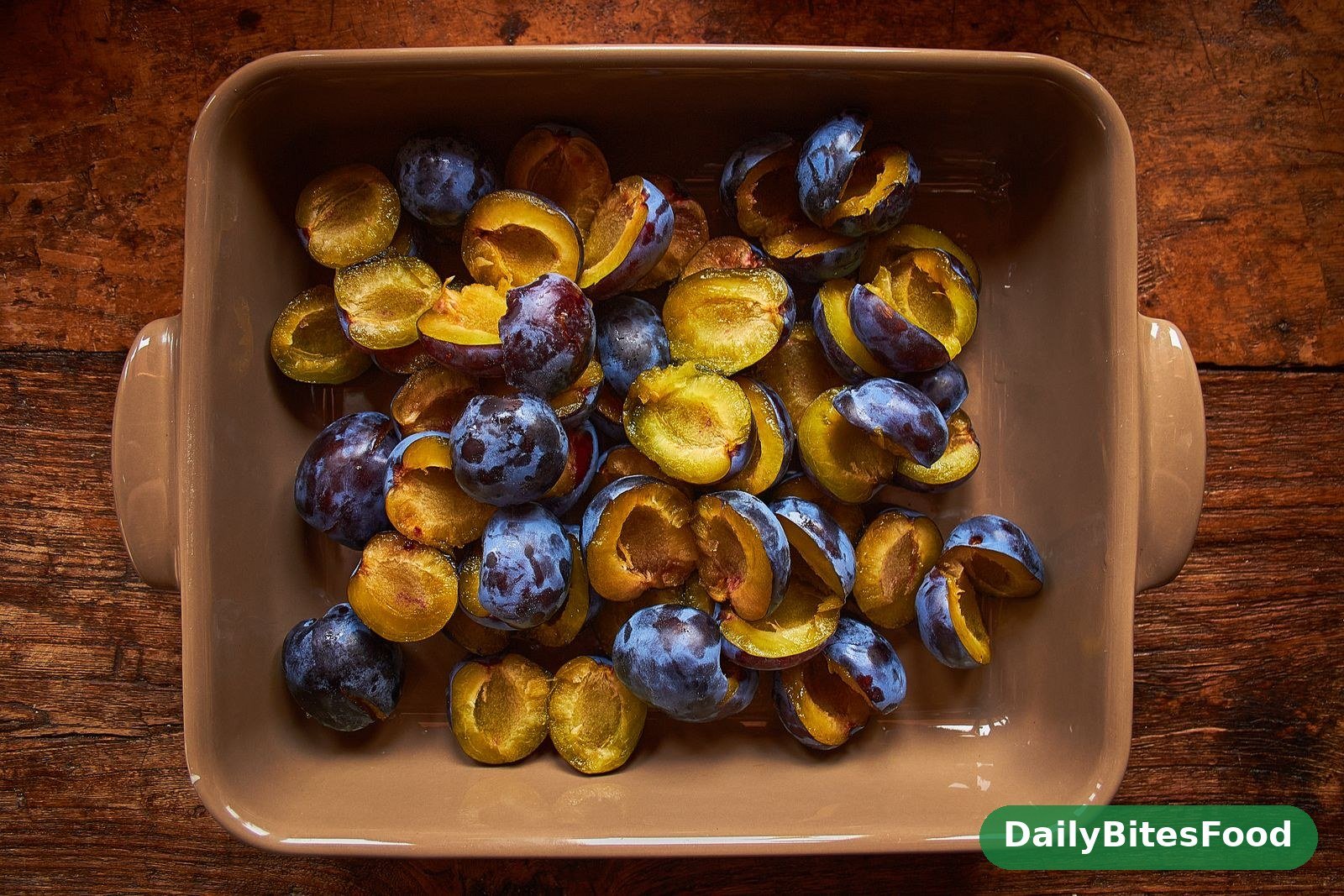
Start by heating the oven to 190°C (375°F), and give it a good ten minutes to come fully up to temperature before the plums go in. A properly hot oven is what gets the sugar bubbling and the plum skins wrinkling nicely, and if the oven is still warming up when you slide the dish in, the fruit will steam gently instead of roasting, and you will miss out on that lovely caramel edge. While the oven heats, choose a baking dish that holds the plum halves snugly in a single layer. A small ceramic dish, a pie plate, or a shallow roasting tin all work well. If the dish is too big, the juices will spread out thinly and dry up; if the plums are packed in close together, they will baste each other in their own syrup as they cook, which is exactly what you want.
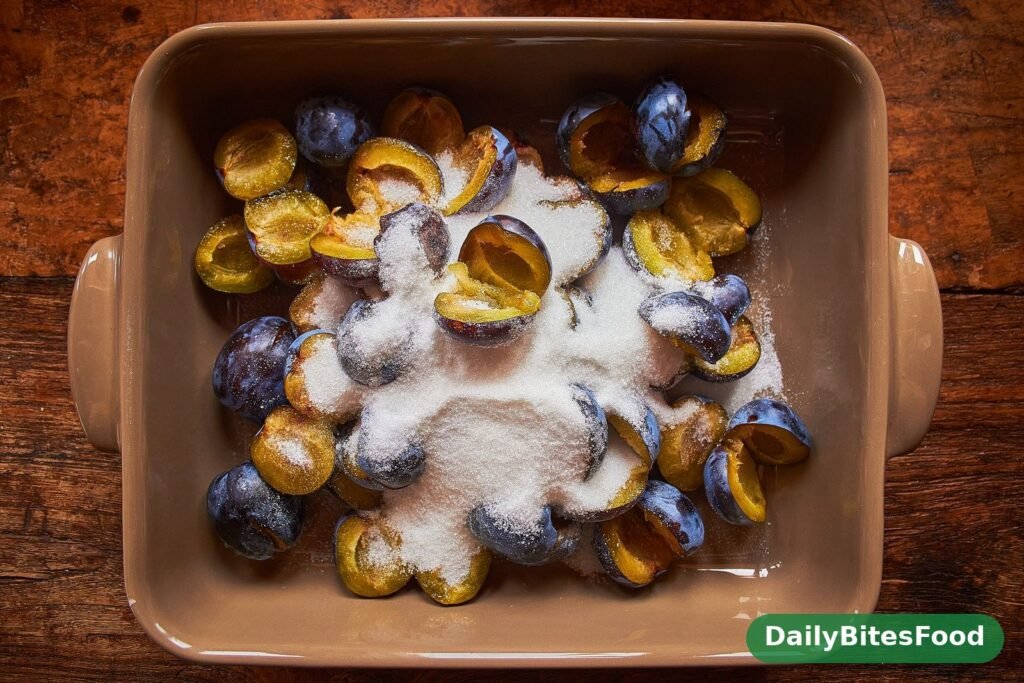
Now prepare the plums. Wash them, dry them gently, and cut each one in half around the middle, following the natural seam that runs around the fruit. Twist the two halves apart and lift out the stone with the tip of a small knife or a teaspoon. If a stone is stubborn, just cut the flesh away from it carefully — nobody minds a slightly uneven plum half once it is baked and covered in syrup. Place the halves cut-side up in the baking dish, packing them in close so they support each other and hold their shape as they soften. This is also the moment to check how ripe they are. A plum that is just ripe, with flesh that gives a little when you press it, is perfect. One that is rock hard will stay sour and firm no matter how long you bake it, and one that is already very soft and bruised will collapse into a puddle, which still tastes good but is not quite the dessert you had in mind.
Next, make the cinnamon sugar. In a small bowl, stir together the brown sugar, ground cinnamon, nutmeg if you are using it, and the pinch of salt until the spice is evenly mixed through the sugar. The salt might seem like an odd addition to a dessert, but a tiny pinch does wonders here — it sharpens the sweetness of the sugar and brings out the flavour of the plums, much like salt does in a cake. Spoon the mixture evenly over the cut side of each plum half, letting a little fall into the hollow where the stone was. That little pocket is the best part, because it fills with syrup as the plums bake. Then drizzle over the lemon juice and vanilla extract, scatter over the lemon zest, and dot the small pieces of butter on top of the plums. If you are using honey, drizzle it over now too. The butter will melt as the dish heats up and mingle with the sugar and juices to make a glossy sauce, so do not worry if it looks like a lot of separate bits at this stage — the oven will sort all of that out.
Slide the dish into the middle of the hot oven and bake for twenty to twenty-five minutes. You are looking for plums that have softened right through but still hold their shape, with skins that have wrinkled a little and sugar that has melted into a bubbling, syrupy sauce around them. The exact time depends on the size and ripeness of your plums. Small, ripe plums might be done in eighteen minutes, while big, firm ones can need closer to thirty. Start checking at the twenty-minute mark by pressing the flesh gently with the back of a spoon. It should give easily, like the flesh of a ripe peach, and a knife should slide in without any resistance. If the plums still feel firm, give them another five minutes and check again. If the syrup starts to look very dark around the edges, do not panic — that is the brown sugar caramelising, and it tastes wonderful as long as it has not actually burnt. If it does start to smell sharp or look blackened, pull the dish out straight away, because burnt sugar turns bitter fast.
When the plums are done, take the dish out of the oven and let it sit for five minutes before serving. This short rest matters more than you might think. The syrup is bubbling hot and very thin when it first comes out, and as it cools slightly it thickens into something that coats the plums properly instead of running straight off them. Use that time to spoon some of the syrup from the bottom of the dish over the tops of the plums, so every half is glossy and well coated. Serve the plums warm, two or three halves per person, with a generous spoonful of the syrup from the dish and whatever you like alongside. And if you have any plums left over that are too soft for this recipe, do not throw them away — they are perfect for a jam, and this cinnamon plum jam from Taste of Home is a lovely way to use them up.
Tips for Perfect Baked Plums
The single most important thing is choosing the right plums. Look for fruit that is ripe but still firm, with smooth, unblemished skin and a little give when you press it gently near the stem. If the plum feels like a stone, it is not ready, and baking will not fix it — it will soften a bit, but it will stay tart and a little tough in the middle. If it feels very soft and the skin is wrinkled already, it is overripe and will fall apart in the oven. The sweet spot is a plum that smells faintly sweet at the stem end and yields just a little to pressure. Any variety works here, from deep purple plums to red or golden ones, and using a mix of colours in one dish looks beautiful on the table. I have made this with whatever the market had that week, and it has never once let me down.
Do not be shy with the brown sugar, but do taste your plums first. A sweet, ripe plum needs less sugar than a tart one, and there is no fixed amount that suits every batch of fruit. The four tablespoons in the recipe are a good starting point for plums that are ripe and a little tart, which is how most of them are. If your plums are very sweet, you can cut the sugar back to three tablespoons. If they make your mouth pucker when you taste one raw, add an extra tablespoon and a drizzle of honey. The cinnamon should be fresh too, if you can manage it. Ground cinnamon loses its warmth surprisingly quickly once the jar has been open for a year or so, and a fresh jar makes a real difference in a recipe this simple, where there is nowhere for a tired spice to hide.
Watch the oven time rather than setting a timer and walking away. Plums go from perfectly soft to collapsed in the space of a few minutes, and the difference between the two is mostly about checking at the right moment. Start checking at eighteen minutes, and check again every few minutes after that. You want the flesh to be tender all the way through but still holding its shape in the dish, because a plum that has completely fallen apart is still delicious, but it is a sauce rather than a dessert, and it is harder to serve neatly. If your plums are different sizes, put the smaller ones in the middle of the dish and the larger ones around the edges, where the heat is a little stronger, so they cook more evenly.
A few small details make this dessert taste like it came from a much fancier kitchen. Adding the lemon zest as well as the lemon juice gives the syrup a bright, fresh note that keeps the sweetness in check, and grating it finely means it melts into the sauce instead of sitting on top in visible flecks. Dotting butter over the plums rather than melting it first means it bastes the fruit slowly as it melts, and the syrup turns out richer and glossier. And if you like a little crunch, a spoonful of crumbled amaretti biscuits or a handful of toasted flaked almonds scattered over the top just before serving adds a lovely contrast to the soft fruit. For another way to use plums in a baked pudding, the BBC Good Food plum crumble is a classic worth trying when you have a few more plums to use up.
Finally, think about the dish you bake them in. A ceramic or enamel dish holds heat gently and keeps the plums warm at the table for longer, which is a real advantage with a dessert that is best served warm. A metal roasting tin works fine too, but the syrup can darken and catch more quickly in metal, so keep an eye on it. Whichever dish you use, choose one that is presentable enough to bring to the table, because baked plums look their best served straight from the dish they were cooked in, with the syrup glistening and the skins wrinkled and dark. There is something honest and inviting about that, and it suits this dessert far better than trying to plate each half neatly on its own.
Serving Ideas
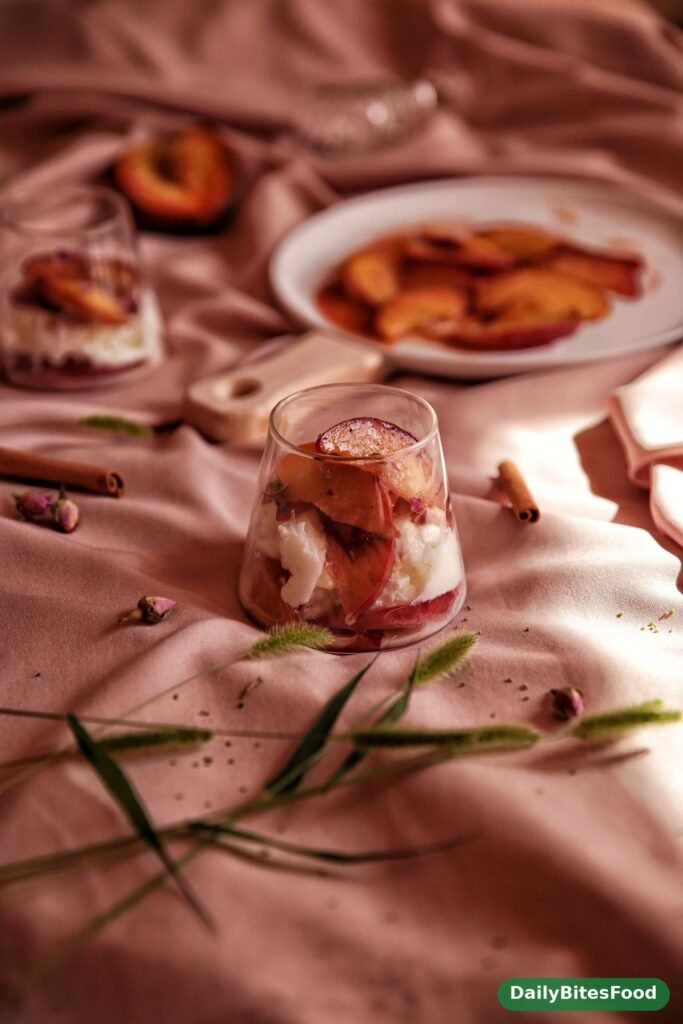
The simplest way to serve baked plums is warm from the dish with a scoop of vanilla ice cream, and honestly, it is hard to improve on that. The cold cream melts slowly into the hot syrup, the vanilla softens the tart edge of the fruit, and every spoonful has a bit of everything in it — soft plum, warm syrup, and cold, creamy ice cream. It is the combination I come back to most often, and it is the one my family asks for by name. If you want to make it a little more special, warm the bowls first so the ice cream does not melt too fast, and add a crumbled biscuit or a few toasted almonds on top for crunch. A small-batch treat on the side works beautifully too — a couple of small batch chocolate chip cookies without brown sugar on the plate turn a simple bowl of fruit into a proper dessert course.
Custard is the other classic partner, and it suits baked plums wonderfully, especially on a cold evening. Pour warm custard over the plums in the bowl, or serve it in a jug on the table so everyone can help themselves. Thick cream or Greek yoghurt are lighter options that work just as well, and the yoghurt in particular is lovely because its tang echoes the tartness of the plums. For a breakfast version, spoon the warm plums and their syrup over thick Greek yoghurt or porridge, with a sprinkle of granola on top. It feels indulgent but it is really just fruit and yoghurt, and it is a wonderful way to start a slow weekend morning. If you are short on breakfast inspiration generally, these easy breakfast recipes with few ingredients are full of simple ideas that pair well with a dish like this.
Baked plums also work beautifully as part of a bigger dessert spread. Set the dish in the middle of the table alongside a bowl of ice cream, a jug of custard, and a plate of biscuits, and let everyone serve themselves. It takes the pressure off the cook and it suits the relaxed, help-yourself spirit of this pudding. For a dinner party, you can bake the plums in individual ramekins instead of one big dish, which looks elegant and means everyone gets their own little portion with its own pool of syrup. A few fresh mint leaves on top, or a grating of dark chocolate over the warm fruit, make it feel like a restaurant dessert with almost no extra effort. And if there are children at the table, let them choose their own topping — ice cream, cream, custard, or a crumbled oatmeal cookie without eggs and butter scattered over the top is always a popular choice.
Storage and Reheating
Leftover baked plums keep well, which is handy because it is easy to make more than you need when plums are cheap and plentiful. Let the plums cool completely in the dish, then transfer them with all of their syrup into an airtight container and keep them in the fridge for up to four days. The syrup will thicken as it chills and turn almost jam-like, which is no bad thing at all — cold baked plums spooned over yoghurt or porridge in the morning are genuinely delicious, and the flavours actually deepen a little overnight as the cinnamon works its way through the fruit. Keep the container sealed well, because the plums will happily pick up other smells from the fridge if you leave them uncovered.
To reheat, the oven is the best option. Tip the plums and their syrup into a small ovenproof dish, cover loosely with foil, and warm them in a 160°C (325°F) oven for ten to fifteen minutes until they are heated right through. The foil stops the syrup from drying out or darkening too much, and the gentle heat brings the plums back to that soft, just-baked texture. The microwave works in a pinch — a minute or so on medium power, covered, with a spoonful of water added if the syrup looks thick — but the plums can go a little soft around the edges, so the oven is worth the extra few minutes when you have them. Either way, serve them warm with fresh cream or ice cream, exactly as you would have done on the first day.
For longer storage, baked plums freeze surprisingly well. Spoon the cooled plums and syrup into a freezer-safe container or bag, label it with the date, and freeze for up to three months. Thaw overnight in the fridge before reheating, and do not refreeze them once they have been thawed. The texture will be a little softer after freezing, so thawed plums are best served over yoghurt, porridge, or ice cream rather than on their own, where the softness is an advantage rather than a flaw. If you find yourself with a glut of plums at the height of the season, freezing a few batches of baked plums is one of the easiest ways to enjoy them long after the season has ended.
Frequently Asked Questions
Can I use frozen plums for this recipe?
Yes, you can, and they work better than you might expect. Thaw them completely first and drain off any excess juice before you put them in the dish, or the syrup will end up thin and watery. Frozen plums are softer than fresh ones, so they will need less time in the oven — start checking after fifteen minutes. The flavour is just as good, and this is a handy option in winter when fresh plums are out of season. Just be aware that the plums will be softer and may not hold their shape quite as neatly as fresh ones, so serve them in bowls with plenty of syrup rather than trying to plate them individually.
What is the best type of plum to use for baking?
Almost any plum works, but the best ones are those that are ripe yet still firm, with a good balance of sweetness and tartness. Deep purple plums are a classic choice because they hold their shape well and their colour deepens beautifully in the oven. Red plums are a little sweeter and softer, and golden plums are lovely too, with a honeyed flavour that needs slightly less sugar. If you can, buy plums that are all roughly the same size so they cook evenly. Avoid very underripe plums, which stay sour, and very overripe ones, which collapse. A mix of varieties in one dish looks gorgeous and tastes interesting, so do not be afraid to combine them.
Can I make baked plums without butter?
Yes, absolutely. The butter adds richness and helps the syrup turn glossy, but the recipe works well without it. You can leave it out entirely, or replace it with a tablespoon of coconut oil or a drizzle of olive oil if you want a little richness without dairy. Without butter, the syrup will be slightly thinner and less glossy, but the flavour of the plums, cinnamon, and brown sugar will still shine through. If you are serving the plums to someone who avoids dairy, this is an easy swap to make, and the dessert will still be delicious with a scoop of dairy-free ice cream or coconut yoghurt on top.
How do I stop the plums from going mushy?
The key is timing and choosing the right fruit. Start with plums that are ripe but firm, and check them early — from about eighteen minutes into the baking time. As soon as a knife slides easily into the flesh, take them out, because they will keep softening a little in the residual heat of the dish. Packing the halves snugly together in a small dish also helps, because they support each other and hold their shape better than plums spread out in a large tin. And resist the urge to stir or move them around while they bake. Every time you poke at them, you risk breaking the soft flesh, so leave them alone and let the oven do its work.
Can I prepare baked plums ahead of time?
Yes, and they are a great dessert to prepare ahead. You can halve and stone the plums, sprinkle over the sugar and cinnamon, and keep the prepared dish covered in the fridge for up to a day before baking. Just take it out of the fridge twenty minutes before it goes in the oven so the dish is not fridge-cold, and add a few extra minutes to the baking time. You can also bake the plums fully ahead of time and reheat them gently in the oven before serving, which is ideal for a dinner party. The syrup keeps beautifully, and the flavour actually improves as the plums sit in it.
What can I serve with baked plums besides ice cream?
There are plenty of options beyond ice cream. Warm custard is a classic, and thick cream, Greek yoghurt, or mascarpone all work beautifully. For a lighter option, serve the plums with a dollop of natural yoghurt and a sprinkle of granola, which turns them into a lovely breakfast or brunch dish. Crumbled biscuits, toasted nuts, or a spoonful of granola add crunch. You can also serve baked plums alongside a slice of plain sponge cake or a butter cake, letting the syrup soak into the crumb. And if you want something a little different, a small glass of dessert wine or a cup of spiced tea alongside a bowl of warm plums makes a quiet, cosy end to an evening meal.