Chocolate Hazelnut Babka with Cocoa Swirl
There is a particular kind of quiet that falls over my kitchen when a babka is in the oven. It is not the quiet of nothing happening. It is the quiet of everyone in the house drifting toward the smell, drawn by warm chocolate and butter and yeast, waiting for the moment I open the oven door. The first time I made a chocolate babka, I had no idea what I was doing, really. I had seen one in a bakery window years ago, all twisted and glossy, and I had carried the idea of it around in my head ever since. It looked like something only a professional baker could make. It looked far too fancy for my little kitchen and my battered loaf tin. But one rainy Saturday, with a bag of hazelnuts in the cupboard and a block of dark chocolate that had been waiting for a purpose, I decided to try anyway, and what came out of that oven changed the way I think about baking at home.
Babka is one of those recipes that teaches you something about patience. The dough is rich and soft, full of butter and eggs, and it does not rush for anyone. It rises slowly, it needs a rest in the fridge, and it asks you to wait again after you have shaped it. I will be honest with you: the first time I made it, I kept peeking under the tea towel every ten minutes like that would somehow hurry it along. It did not. But the waiting is the whole point. While the dough rests, the flavours settle and deepen, the butter firms up so the loaf is easy to shape, and the yeast does its slow, steady work.
What makes this version special, at least to me, is the hazelnut. Chocolate on its own is lovely, but chocolate with hazelnut is something else entirely. The nuts go in toasted, so they bring this warm, almost caramel-like depth to the filling, and when they are chopped and folded into the cocoa paste, every bite has a little crunch tucked inside the softness. I use a mix of melted dark chocolate, cocoa powder, and a spoonful of sugar, and the result is a filling that stays gooey even after baking, never dry, never chalky.
I am not going to pretend this is a ten-minute recipe. It is not, and anyone who tells you otherwise is selling you something. But it is also not a difficult recipe. The steps are simple, the ingredients are ordinary, and most of the time involved is just waiting while the dough does its thing. You do not need a stand mixer, although it helps, and you do not need any special equipment beyond a loaf tin and a rolling pin. What you need is a free afternoon, a little bit of faith, and the willingness to get your hands dusty with flour. If you have ever wanted to bake something that makes people stop and stare when you set it on the table, this is the one. It looks like a bakery showpiece, it tastes like the best thing you have ever baked, and the whole house will smell like a chocolate shop while it is in the oven.
Why You’ll Love This Recipe
The first reason is the obvious one: it tastes extraordinary. The dough is soft and buttery, almost like a brioche, and the filling is dark, rich, and just sweet enough. The sugar syrup brushed over the top while the loaf is still hot soaks in and leaves a gentle shine, and the whole thing stays moist for days. I have served this to people who claim they do not like cake, and I have watched them go back for a second slice before they have finished the first. There is something about the combination of warm chocolate, toasted hazelnut, and soft bread that is very hard to resist.
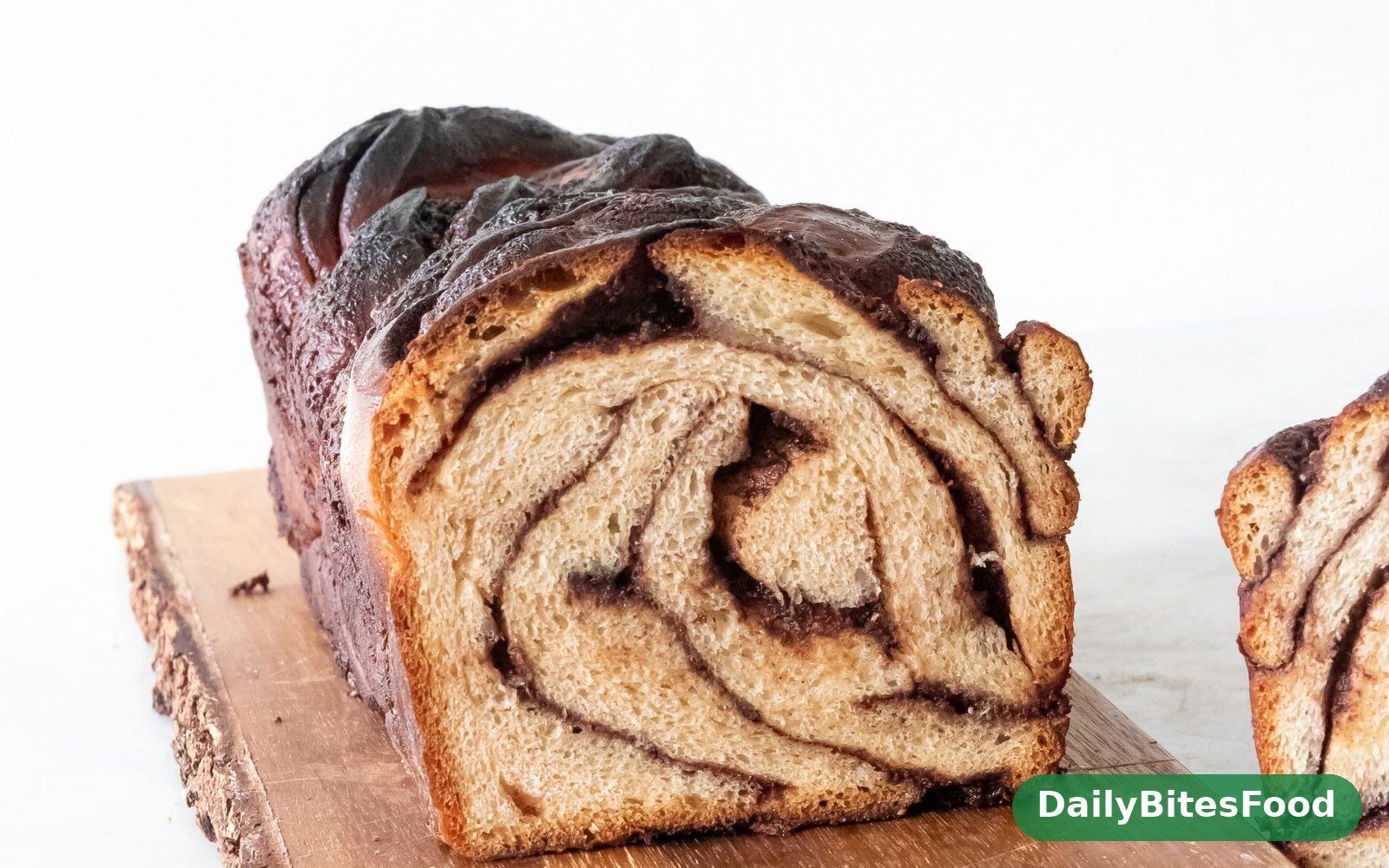
The second reason is the way it looks. When you twist the two halves of the rolled dough together, the cut sides face outward, and the chocolate swirl ends up right on the surface of the loaf, dark against gold. It looks incredibly impressive, like something from a bakery window, and yet the technique is genuinely simple once you have done it once. You roll, you spread, you roll up, you cut, you twist. That is the whole secret.
It is also a wonderfully forgiving recipe, which matters more than people admit. If your twist is a bit lopsided, it still tastes wonderful. If your dough rises a little slower because the kitchen is cold, you just give it more time. If the top browns too fast, a loose sheet of foil fixes it. Babka is not a fussy, precise bake like a macaron. It is a warm, generous, old-fashioned kind of baking, and it rewards you even when things are not perfect.
Finally, this is a bake that turns an ordinary weekend into something worth remembering. I make it when friends are coming over, when the family is all home, or when I just want the house to feel warm and full. It is brilliant for brunch, it is lovely with coffee in the afternoon, and it makes a wonderful gift, wrapped in parchment and tied with string. A loaf of homemade babka says something that a shop-bought cake never can, and people remember it. If you are in the mood for a baking project, the classic Taste of Home chocolate babka is a lovely reference to compare notes with, and it shows just how many ways there are to make this wonderful loaf your own.
Ingredients You’ll Need
- 500 g (about 4 cups) strong white bread flour, plus extra for dusting
- 100 g (1/2 cup) caster sugar, plus 75 g for the syrup
- 7 g (1 sachet / 2 1/4 teaspoons) fast-action dried yeast
- 1 teaspoon fine sea salt
- 180 ml (3/4 cup) whole milk, lukewarm
- 2 large eggs, at room temperature
- 100 g (7 tablespoons) unsalted butter, softened and cut into small cubes, plus extra for greasing
- 1 teaspoon vanilla extract
- 100 g (3 1/2 oz) dark chocolate, finely chopped
- 60 g (4 tablespoons) unsalted butter, for the filling
- 40 g (1/3 cup) cocoa powder, unsweetened
- 60 g (1/2 cup) hazelnuts, toasted and roughly chopped
- 1/2 teaspoon ground cinnamon
- 75 ml (1/3 cup) water, for the syrup
- 1 tablespoon demerara sugar, for sprinkling (optional)
How to Make Chocolate Hazelnut Babka with Cocoa Swirl
Start with the dough, because everything else follows from it, and give yourself plenty of time. Warm the milk until it is just lukewarm, the temperature of a comfortable bath, and pour it into a large mixing bowl. If you are using a stand mixer, fit the dough hook and add the flour, sugar, yeast, and salt to the bowl, then pour in the milk, the beaten eggs, and the vanilla. Mix on low speed for a couple of minutes until a shaggy dough comes together, then add the softened butter a few cubes at a time, waiting for each addition to disappear into the dough before adding the next. It will look messy and sticky for a while, and that is completely normal. Keep mixing for eight to ten minutes until the dough turns smooth, elastic, and slightly glossy, pulling away from the sides of the bowl. If you are kneading by hand, the same thing takes about fifteen minutes on a lightly floured surface, and it is good exercise besides. The dough should spring back slowly when you press it with a fingertip.
Once the dough is smooth, shape it into a ball and place it in a clean bowl brushed with a little oil. Cover the bowl with cling film or a damp tea towel and leave it somewhere warm for about an hour and a half to two hours, until it has roughly doubled in size. If your kitchen is cold, the oven with just the light on makes a lovely warm spot. While it rises, toast the hazelnuts in a dry frying pan over medium heat for three to four minutes, shaking the pan often, until they smell nutty and the skins start to loosen. Tip them onto a clean tea towel, rub off as much skin as you can, and chop them roughly. Let them cool completely. This is also a good time to grease your loaf tin with butter and line it with a strip of baking parchment, leaving an overhang on the long sides so you can lift the loaf out later.
When the dough has doubled, punch it down gently and turn it out onto a lightly floured surface. Roll it into a rectangle about 40 cm by 30 cm (16 by 12 inches), with the long side facing you. Now make the filling. Melt the 60 g of butter in a small saucepan, take it off the heat, and stir in the chopped dark chocolate until it melts into the butter. Add the cocoa powder, sugar, and cinnamon, and stir until you have a thick, dark, spreadable paste. Let it cool for a few minutes so it thickens slightly, then spread it evenly over the dough, right to the edges. Scatter the chopped hazelnuts over the top, pressing them gently into the filling so they stay put.
Roll the dough up tightly from the long edge nearest you, like a Swiss roll, keeping the roll as even as you can. Once you have a log, slide it onto a piece of baking parchment and pop it in the fridge for fifteen to twenty minutes. This chilling step is the trick that makes the next part easy, because a cold, firm log cuts cleanly instead of squashing. Take a sharp knife and cut the log in half lengthways, right down the middle, so you have two long pieces with the chocolate layers exposed. Lay them side by side, cut sides facing up, and twist them around each other, crossing one over the other, until you have a plait. Tuck the ends under and lift the whole twist into your prepared loaf tin, cut sides still facing up so the swirl shows.
Cover the tin loosely with cling film or a tea towel and leave it to rise again for forty-five minutes to an hour, until the dough has puffed up and fills the tin nicely. Toward the end of the rise, heat the oven to 180°C (160°C fan / 350°F). Bake the babka for forty-five to fifty-five minutes, until it is deeply golden and a skewer pushed into the centre comes out clean with no raw dough attached. If the top starts to darken too quickly, lay a loose sheet of foil over it for the last fifteen minutes. While the loaf bakes, make the syrup by heating the remaining 75 g of sugar with the water in a small pan until the sugar dissolves, then bring it to a gentle boil for a minute and take it off the heat. As soon as the babka comes out of the oven, brush the hot syrup generously all over the top. It will soak in and leave a beautiful shine. Leave the loaf to cool in the tin for fifteen minutes, then lift it out with the parchment and cool completely on a wire rack before slicing. I know waiting is hard, but a warm babka falls apart when you cut it, and the swirl deserves a clean slice.
Tips for Perfect Chocolate Hazelnut Babka
The most important tip is to let the dough rise properly and not to rush it. A rich dough like this one, full of butter and eggs, rises more slowly than a plain bread dough, and that is fine. If your kitchen is cool, give it an extra half hour rather than forcing it into the oven under-proved. A loaf that has risen properly bakes up light and soft, while one that was rushed comes out dense and heavy. The poke test is your friend: press the dough gently with a fingertip, and if the dent springs back slowly and only halfway, it is ready.
Chilling the rolled log before cutting is the second tip, and I cannot stress it enough. A warm, soft log squashes under the knife, the filling oozes out, and the twist turns into a mess. Fifteen minutes in the fridge firms the butter in the filling and the dough itself, so you get clean cuts and a tidy, beautiful twist. If your kitchen is very warm, give it twenty-five minutes.
Use good chocolate and good cocoa, because the filling is the heart of this bake. A dark chocolate with around 60 to 70 percent cocoa gives a deep, grown-up flavour that is not too sweet, and a decent unsweetened cocoa powder makes the swirl properly dark. Cheap chocolate tends to be very sweet and a little waxy, and you will taste the difference. The same goes for the hazelnuts: toast them yourself rather than buying pre-chopped ones, because the toasting is where the flavour comes from. For more chocolate inspiration, the BBC Good Food easy chocolate cake is a lovely everyday bake that uses the same idea of a rich cocoa crumb.
Watch the oven temperature and trust your eyes as well as the clock. Every oven is a little different, and babka is a thick loaf, so the centre needs time to cook through. If the top is getting dark but you suspect the middle is still doughy, cover it loosely with foil and give it another ten minutes. A skewer test is the most reliable check: it should come out clean, with maybe a little melted chocolate on it, but no wet dough. And do not skip the syrup. It keeps the crumb moist and adds a gentle sweetness that balances the dark chocolate.
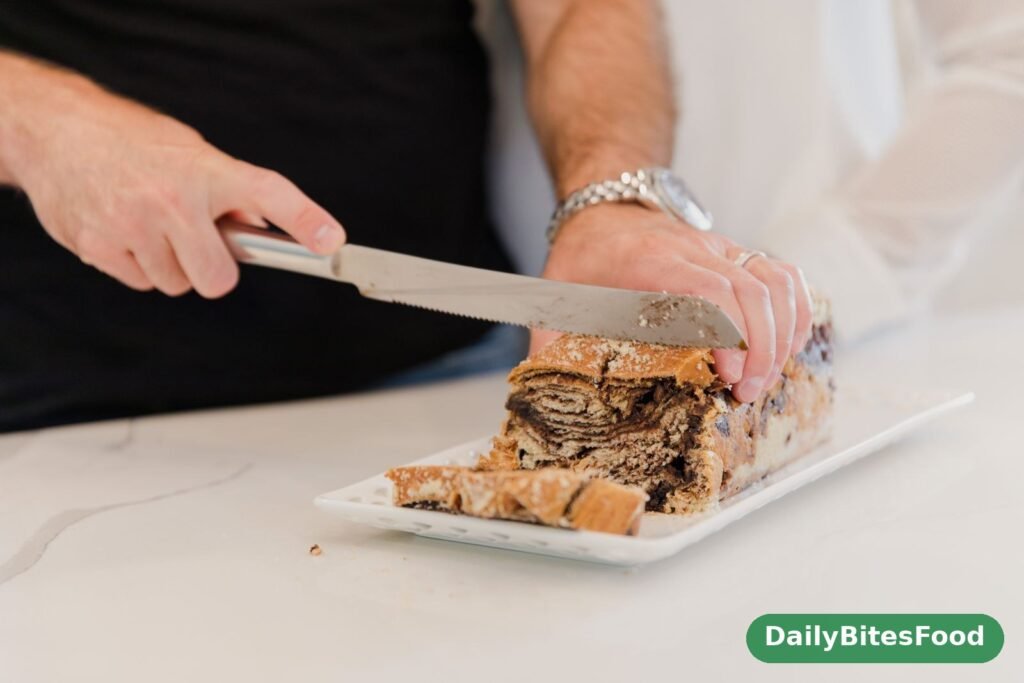
Finally, slice with a serrated bread knife and a gentle sawing motion, and let the loaf cool completely first. I have ruined more than one beautiful loaf by cutting into it while it was still warm, and the swirl just collapses into crumbs. If you can wait, wait.
Variations to Try
Once you have made the classic version, there is a whole world of variations to play with. A cinnamon sugar babka is a lovely change: swap the cocoa filling for softened butter mixed with brown sugar and two teaspoons of cinnamon, and you get a loaf that tastes like the best cinnamon roll you have ever had. A Nutella-style version is even easier, and children love it — spread chocolate hazelnut spread straight onto the dough, sprinkle over the chopped hazelnuts, and roll it up exactly the same way. It is a little sweeter, a little simpler, and it disappears just as fast.
For a fruit version, add a handful of dried cherries or chopped dried apricots to the chocolate filling. The tartness of the fruit cuts through the richness of the chocolate beautifully, and the dried cherries in particular look gorgeous in the swirl. Orange zest is another wonderful addition: a teaspoon of finely grated orange zest stirred into the filling gives the whole loaf a bright, citrus lift that works brilliantly with dark chocolate. If you love chocolate baking in general, this small batch of chocolate chip cookies without brown sugar is another favourite of mine for days when I want something sweet without a whole afternoon of baking.
If you want to make two smaller loaves instead of one big one, divide the dough in half after the first rise and make two shorter twists in two smaller tins. They bake a little faster, usually in about thirty-five minutes, and they make lovely gifts. You can also bake the babka in a round cake tin as a wreath: twist the dough, join the ends to make a ring, and bake it in a round tin lined with parchment.
Serving Ideas
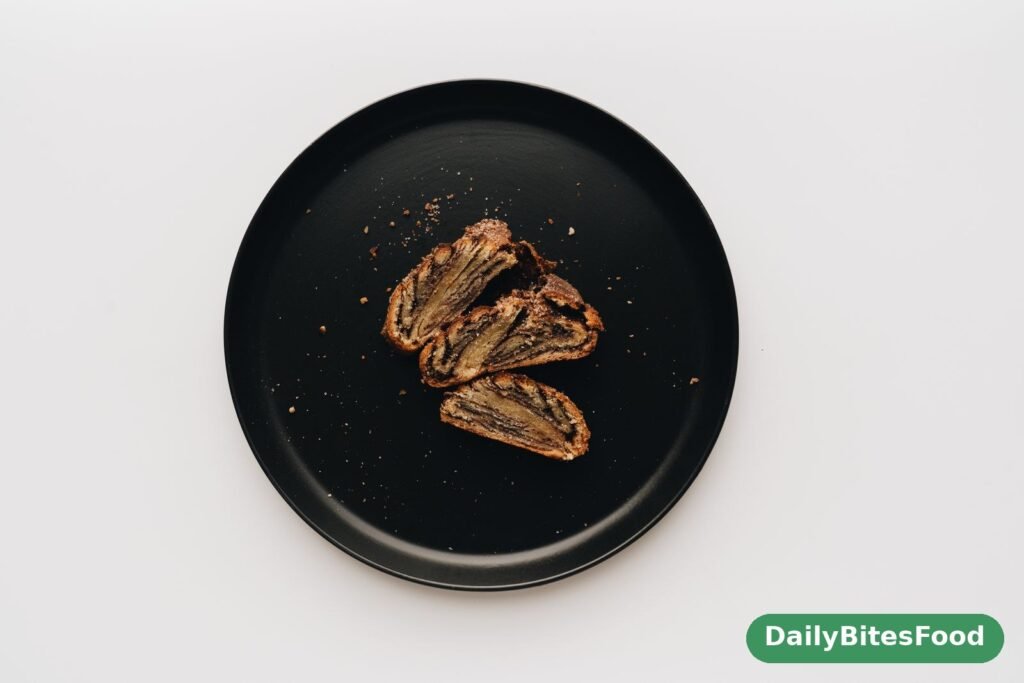
The simplest way to serve babka is the best way: thick slices, still slightly warm, with a mug of coffee or a pot of tea. That is how we eat most of it in our house, standing in the kitchen, tearing off pieces with our hands before it has even reached a plate. But if you want to make more of an occasion of it, there are plenty of ways to dress it up. A slice toasted lightly in a dry pan, with a smear of salted butter, is a wonderful breakfast. The butter melts into the warm crumb, the chocolate goes soft again, and it is honestly one of the best things I have ever eaten for breakfast.
For brunch, serve the babka alongside a fruit salad and some Greek yoghurt, and let people help themselves. The richness of the loaf is balanced beautifully by something fresh and sharp, and it turns a simple loaf into the centrepiece of the table. Speaking of slow weekend mornings, these easy breakfast recipes with few ingredients are full of ideas for days when a slice of babka and a pot of coffee feel like enough. It is also lovely with vanilla ice cream as a dessert, the warm slice and the cold ice cream melting together on the plate. If you are serving it at a party, slice the whole loaf in advance and fan the slices out on a board with some fresh berries and a little bowl of whipped cream, and watch it disappear.
Babka also makes a wonderful gift. Wrap a cooled loaf in baking parchment, tie it with string, and tuck in a little handwritten note. I have given babka as a housewarming gift, a thank-you gift, and a birthday gift, and it has always been received with more delight than anything I could have bought. It travels well, it keeps for days, and it tells the person you made it for that you cared enough to spend an afternoon in the kitchen. After a rich dinner, a thin slice of babka with coffee is the perfect ending, and it pairs beautifully with a savoury main like this easy chicken pasta without heavy cream, where the creamy, comforting pasta and the sweet loaf bookend the meal nicely.
Storage and Reheating
Babka keeps remarkably well, which is good news, because it is a big loaf. Wrapped tightly in cling film or stored in an airtight container at room temperature, it stays soft and moist for three to four days. The syrup glaze helps here, sealing in moisture and keeping the crumb tender.
To refresh a slice, pop it in a toaster for a minute, or warm it in a low oven at 150°C (300°F) for five minutes. The chocolate softens, the crumb warms through, and it tastes almost freshly baked. A quick turn in a dry frying pan works too, and it gives the cut sides a lovely light toast. Avoid the microwave if you can, because it tends to make the bread rubbery.
For longer storage, babka freezes beautifully. Slice the cooled loaf first, wrap the slices in pairs in cling film, and pop them into a freezer bag with the air pressed out. They will keep for up to three months. To serve, thaw a slice at room temperature for about half an hour, or toast it straight from frozen. I almost always freeze half a loaf on baking day, because it means there is always a slice of babka waiting in the freezer for a day when I need something sweet and homemade. Whole loaves freeze well too, wrapped tightly in two layers of cling film and a layer of foil, and they thaw overnight on the counter. If you like baking ahead for busy weeks, these oatmeal cookies without eggs and butter freeze just as well and are another brilliant make-ahead treat to keep on hand.
Frequently Asked Questions
Can I make chocolate hazelnut babka without a stand mixer?
Yes, absolutely, and I have done it many times. Kneading by hand takes about fifteen minutes, and it is honestly quite satisfying work. Turn the dough out onto a lightly floured surface and knead with the heel of your hand, folding and turning as you go. It will be sticky at first, so resist the urge to add lots of extra flour, because that will make the loaf heavy. Just keep kneading, and after ten minutes or so it will turn smooth and elastic. A dough scraper is a helpful tool if you have one, but it is not essential.
How do I know when the babka is fully baked?
The most reliable test is a skewer pushed into the thickest part of the loaf. It should come out clean, with perhaps a little melted chocolate clinging to it, but no wet, sticky dough. The top should be deeply golden brown, and the loaf should sound slightly hollow when you tap the top. If you have a thermometer, the internal temperature should read around 88 to 90°C (190 to 195°F). Remember that the loaf keeps cooking a little from residual heat after it comes out of the oven, so do not be tempted to leave it in too long.
Can I prepare the babka dough the night before?
Yes, and it actually improves the flavour. After kneading, place the dough in an oiled bowl, cover it tightly, and put it straight in the fridge overnight instead of leaving it to rise at room temperature. The slow, cold rise develops a deeper, more complex flavour. The next morning, take the dough out of the fridge and let it sit at room temperature for thirty to forty-five minutes until it is soft enough to roll, then carry on with the filling and shaping as usual. This is my preferred way to make babka, because it spreads the work over two days.
Why did my babka filling leak out during baking?
A little leaking is normal, and it usually just caramelises on the surface and tastes wonderful. But if a lot of filling escaped, the most common cause is rolling the log too loosely, which leaves gaps, or not chilling the log before cutting, which lets the filling stay runny. Make sure you roll the dough up tightly, tucking as you go, and chill the log for at least fifteen minutes before you cut it. Also check that your filling was not too hot when you spread it, because a hot filling melts the butter in the dough and makes everything slippery. Let it cool until it is thick and spreadable.
Can I use store-bought chocolate hazelnut spread instead of making the filling?
Yes, you certainly can, and it makes a delicious, slightly simpler babka. Spread about 200 g of chocolate hazelnut spread evenly over the rolled-out dough, scatter over the chopped hazelnuts, and carry on as usual. It is sweeter than the homemade filling, so you may want to skip the extra sugar in the syrup or make the syrup a little lighter. The homemade cocoa filling has a deeper, darker chocolate flavour, but the spread version is a wonderful shortcut for a busy day, and children tend to prefer it.
How should I store leftover babka so it stays soft?
Wrap the cooled loaf tightly in cling film or keep it in an airtight container at room temperature, and it will stay soft for three to four days. The sugar syrup glaze is a big help here, because it seals moisture into the crumb. Avoid storing babka in the fridge, because the cold dries bread out quickly and makes the crumb firm and stale-tasting. Frozen slices thaw in about thirty minutes and taste almost freshly baked when warmed gently.